Showing posts with label natural history. Show all posts

Saturday, 22 December 2018

The unexpected winter visitor - Black Throated Diver

Black Throated Diver - Gavia arctica
Arrow Valley Park - 22nd December 2018

by John Hodges

After several days of gloomy weather and a workload, I’d rather not think about, I wrapped up in warm layers, boots and waterproofs and grabbed my camera kit.

The brief but welcome winter sunshine had beckoned me outside, a quick visit to the local Arrow Valley Park and lake was called for, and if I'm lucky a chance to snatch of a photograph of a rare winter visitor from colder, foreign climes.

On Saturday afternoon I was rewarded with an early Christmas present, a Black Throated Diver - Gavia arctica in its winter plumage. It is also known as the Arctic Loon as its habitat range from the Siberian, Arctic circle and Alaska


This streamline diving bird winters in the UK with numbers reaching up to 560 pairs. Today as far as I’m aware was the first time this species had visited The Arrow Valley Lake. Not only is this a rare bird but no way did I expected to see such a beauty in the centre of England. In the winter the birds usually turn up around sheltered parts of the coastline and intertidal river, mostly the northern coastline. The breeding summer population of approx 200 pairs reside in the Highland lochs of Scotland.


On days like today, I’m made aware of why my addiction to natural history and wildlife photography is like drug and a very good drug at that. On any given day you just never can tell what will show itself. As a wildlife photographer who has been fortunate to have explored habitats around the world, research and planning always go a long way if you want a chance of encountering and photographing your species of choice. But when some unexpected species turn up, especially when it’s on your own doorstep the old heart rate goes up and all your senses become hypersensitive. In the briefest blink of an eye, catching a subtle but unusual silhouette, call or flight pattern, you’re transported back to a 10yr old boy pretending to be his idol, David Attenborough. Holding your breath in the hope you get one more glimpse, a photographic record of a bird or butterfly that you’ve only seen in the pages of well-thumbed books.


Saturday 22nd December 2018 was one of those days at Arrow Valley, well it was for me anyway and I suspect the same was felt by the several birders who shared this glorious wanderer during the Christmas week.


Friday, 8 June 2018

Is our Green and Pleasant Land Falling Silent?

Most days I try to spend a few hours in the local countryside, wherever I may be located at the time, exploring and absorbing the riches of the natural world. All life fascinates me, the individual species and the interconnected relationship that build a web of intricacy we are only just starting to understand.

These experiences I've cherished for as long as I can remember. Growing up, my parents spent time with my younger sister and I pointing out the plants and animals and teaching us to respect all life. Later on when I discovered the sciences and great teachers on TV like Carl Sagon, Sir David Attenborough and Sir Patrick Moore. I was inspired, filled with wonder and ambition to understand and see with my own eyes as much as possible while experiencing this brief moment, conscious and alive on this little speck of a green and blue planet. 

Those early and profound influences have never left me. I wouldn't change my passion and connection to the natural world for all the worldly riches and toys that most desire. When I'm immersed in nature, whether in the jungles of Borneo or in a meadow in my native Worcestershire, my heart is full and I stride like the richest man on the planet, truly alive and connected. I wish all could experience the same emotions.

Which brings me around to the very point of this blog post.
I'm the bearer of bad news I'm afraid. Some will be surprised by my conclusions but I'm sure most of you won't be. The voices of alarm have been loud and clear for those paying attention.

For many years I've been talking about, some would say ranting about the disappearing bio-diversity and the falling population numbers of our native UK wildlife. This is well studied by the scientific community and they are all in agreement. 

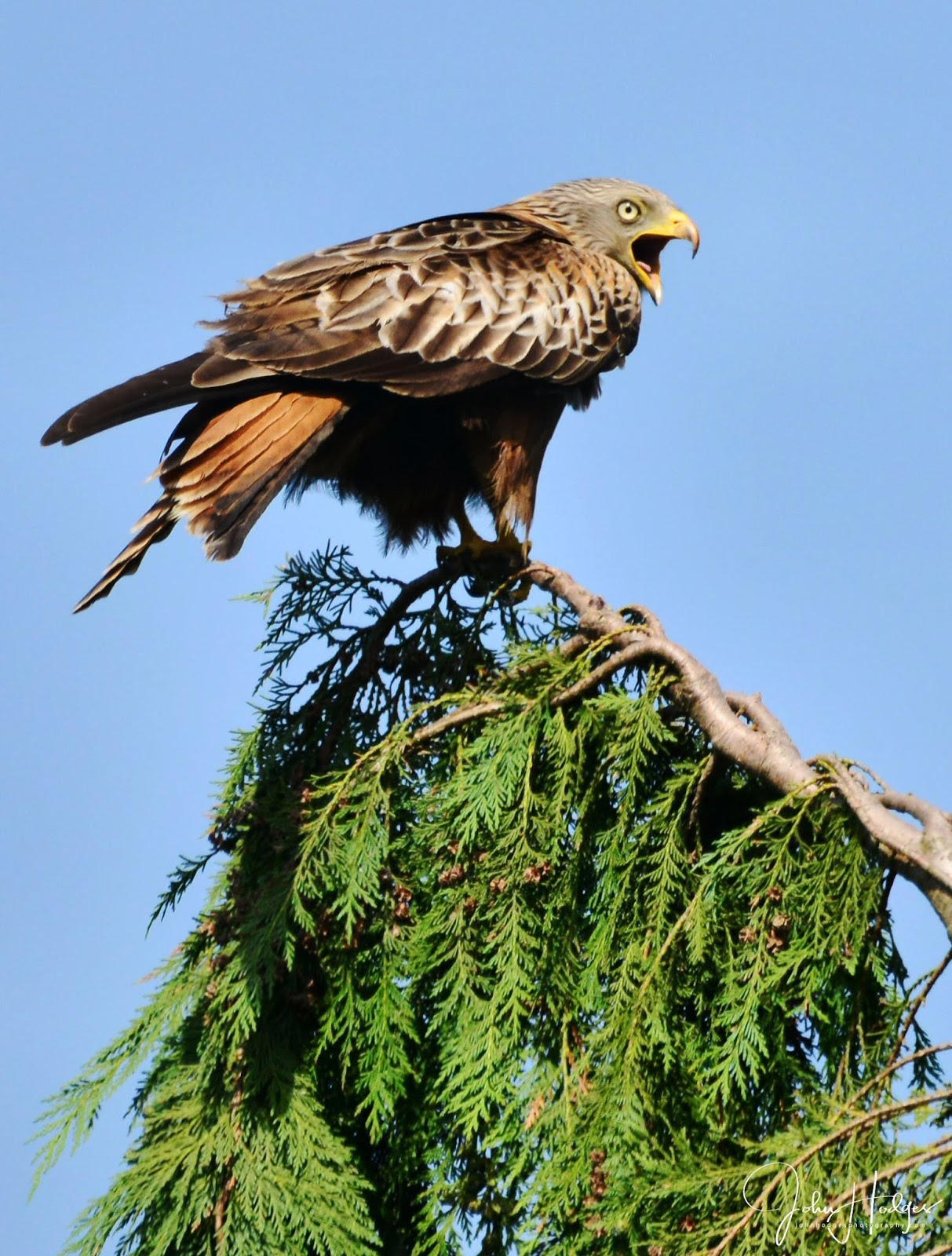
Of course, some species are doing better than others. For instance, the Common Buzzard and Red Kite have made a remarkable comeback across the country. As a boy, if I'd have seen either bird I'd have lost sleep through excitement for weeks. A change in some farming practices and focused conservation can take full credit for these success stories. 


Red Kite - A UK conservation success story

But where there are winners you have to have losers and they vastly outnumber the victors. The once common species that I grew up with like the beautiful Yellowhammer that filled the countryside with its plaintive call is all but now gone. The flocks of acrobatic Lapwing that occupied our farmlands are conspicuous by their absence. Ratty the Water Vole that used to inhabit every stream and waterway has become a symbol of our loss. Declining Farmland Bird Species

The summer days of my youth where the hedgerows, woodlands and fields were alive with delicate but fiercely territorial butterflies shimmering in sunlight while bouncing off each other defending the best pieces of habitat are fast becoming faded memories. Even our wildlife-friendly garden that has been planted and designed deliberately to attract as many species as possible now, in contrast to long past years, is an empty refuge for the few remaining visitors.

Here's a list of the butterfly species that should be a common sight at the time of the year. How many have you seen? UK Butterfly species on the wing in June


Hedge Brown butterfly

The species I mentioned above, when now encountered, become part of my 'memorable day species' list. 

How and why has this happened?

The answers to the above questions are many and complex. But some are obvious if we open our eyes.

Just this morning while walking just after dawn with a good friend and fellow naturalist in the rolling, lush countryside near my home. The countryside was all but silent. When the classically and rich English dawn chorus that you've been used to is missing, the silence rings in your ears. This is not new to me at all, unfortunately. This is a now common observation. 

An insect desert where it should be an oasis 

The farmland adjacent to the mixed woodland bordered by a 5-metre strip of grassy verges should have been alive with basking insects, charging up their metabolisms with the warmth of the morning sun. We saw nothing at all, not a single beetle, moth or butterfly. Again this is becoming a common occurrence. Even recent visits to my local, rich flower meadows which were a favourite butterfly patch have yielded very few insects or birds where once there were many.

The use of herbicides and pesticides has become more and more widespread. The dead and yellow grasses line fields, parks and roadsides, eventually turning to dust and blowing away. These are vital habitats for our invertebrates which in turn feed our small birds and mammals, they now lie withered and devoid of life. 

I'm constantly seeing local councils sending out teams of 'sprayers' to decimate the roadsides and paths with the infamous Monsanto Roundup which is actually the brand name for the controversial chemical glyphosate. Everything that falls underneath its toxic rain is killed except for our food crops. 
Don't we use our sciences well? (note the sarcasm). 

The glyphosate residue found in processed bread alone is terrifying, lucky us eh? After finding out this hidden scandal we make our own poison free bread. Unbelievably I know people who actually spray the vegetables that they are growing and then serve them to their families, all in the name of healthy eating!!!! 
More to come on this subject at a later date.


Where do you think all these poisons go? It all seeps, washes into our water aquifers draining into our waterways and enters the food chain affecting all species and that includes us. We are literally soaking our lands in poisons and all for convenience and of course to maximise profits.

The farming community is under huge pressures to keep solvent while under attack from cheaper imports backed by monopolising trade deals. Sure the farmers are subsidised by our governments, but why are we importing grain, fruit and vegetables in the first place? We live in the garden that is our home. 

Trade deals are undercutting our farmers and are being supported with backhanders from Big Agra and all the lovely GMO biotech industries. We are having the very land we live on and our food security compromised for profits. This is having a massive influence on how our countryside is being managed. The poor farmers have little choice than to use poisons to wipe out insects that attack the valued crops. The margins are so slim and hang in the balance every harvest that the risk outways the negative effects, at least in the short term. This trend is happening all over the agricultural world.

Our wildlife shut out by agriculture

A blatant plug here. For more in-depth info on what is happening with our food chain I highly recommend the three book series by my colleague Mark Plummer, you can find his work here or you can contact me for a FREE review copy of any titles in our book catalogue.

Another upward trend I've observed is the increased persecution of our wildlife. It seems to be coming down directly from our governments. They offered the people after a long fought campaign a fox hunting ban but rarely, if ever, enforce it. Recently a £50.00 bounty has been put on the head of every badger in the country (see recent articles here and here). The list of cruel and senseless persecution seems to be growing, they even want to cull our Raven!!

In the last 24hrs while walking the same route described earlier we came across four dead Pheasants, the feet of two separate Roe Deer plus lots of fur in the long grass. We also even found a dead Kestral, a protected species blasted out of the sky and like the other pointless victims left to rot where they fell. Just senseless killing for killing sake is a human trait I will never understand. 

We saw more dead than alive animals during our walk and it just breaks my heart. The wholesale slaughter of the planet wild inhabitant seems to be running out of control. At this point in our history and if we make it into the future we will be defined by our bloodlusts and stupidity. But I have a feeling that mother nature will have her say long before we get to the distant future and hang our heads in shame. 

As my favourite comedian, the late Bill Hicks defined us, "we are a virus with shoes".


The above testimony is only scratching the surface of the biological crisis we are now facing. The seas are full of microplastic and industrial chemical runoff. Our forests around the world are being ripped out of the ground, slashed and burnt, leaving the once majestic treasure houses resembling a post-nuclear wasteland. What for? For plantations producing mainly genetically modified monocultures that go mostly to feed livestock to supply our fast food outlets and western junk food lifestyles.
Ban Palm Oil PETITION UK

Remember this?

All short term and not sustainable while we tick off species after species that disappear into the infinite night of oblivion.

I firmly believe we have reached or are very close to a tipping point of bio-diversity collapse. Can we turn it around? Maybe, but we collectively need to act now. No more corrupt agenda driven arguments, meetings, roundtables and conferences and most of all denial and ignorance. We need action now and the corporations that have natures blood on their hands need to be held accountable. 

But it doesn't stop there. We can make a difference and force the hand of change. 
If you want to make a difference please educate yourselves as to where your money goes. If you're buying products that contain palm oil, GMOs etc find better, cleaner products, they are out there and becoming more available. 

On a Saturday afternoon if you've been taking the easy option of using Roundup instead of working up a sweat to remove the weeds on the drive, ditch the poisons and get a little sweaty. Boycott these evil corporations that lie, deceive and poison us all. Take the money out of the system and the criminal companies will have to adapt and give us ethical and safe products or they will fail. The all-important stockholders will not let that happen I can assure you but we have to apply constant financial pressure for them to change. The same applies to your vote at elections.  Ask the people who put themselves forward as our voice and representatives to be accountable. Check the voting records and demand disclosure of financial records before you place your votes. 
Demand it, it's your human right.


These simple methods, flexing of our intellectual and personal sovereignty have true power, we've just seemed to have been distracted and forgotten that these people work for us. 

Changes in our spending behaviour will help your personal health and the long-term health of your local environment, it's all in our hands and the choices we make. We all need to lead by example and don't settle for other faceless people deciding on our future. Start in your local area by collecting litter when you walk the dog or take the kids to the park. Nobody likes to see litter but how many actually take responsibility and clean it up? Don't wait for others to do this vital and dirty work. 

Here's a great example of someone I know making a difference to our local area, day in day out she's out cleaning up OUR planet, unpaid and voluntarily because she wants change. We all owe people like this a huge debt. Be inspired and lead by example, put a carrier bag in your pocket and piece by piece we can start to clean up this mess of our own making. I never leave home without a litter bag.

Ignorance is no longer a valid excuse, we all have access to the internet or know someone who does. We can't stick our heads in the sand any longer and pretend this isn't happening on our watch. If we don't start to collectively act it will be at our own peril. We can make a difference and learn from our collective stupidity. It's all our fault we've found ourselves here. It's time to admit we're wrong, it's a good thing as it leads to undeniable truth.

For a lesson from history check our Rachel Carson famous book Silent Spring. First published in 1962 alerting the American public about the effects of pesticides and especially the now-banned DDT. Don't let history repeat itself.

Thank you for reading my impassioned rant
John Hodges (a concerned naturalist)

#WeWantWildlife #SaveOurSpecies #DemandCleanFood #BiodiversityFirst #ActNow #BeAWomble

Come and join us on Facebook Pinterest Twitter Instagram


Wednesday, 3 January 2018

Wedding breakfast and the tale of Ducks for sale


26th Oct 2017 Nyaung Pin Thar

Today we hit the road with our trusty driver U Yei Win, our guide Lay Win and head off for another interview in a jungle village called Nyaung Pin Thar.

On route, Lay Win, our guide, says he has a surprise breakfast laid on for us. Not more than a couple of miles past the military checkpoint at the end of Lonton, we come to a busy little village on the shores of the lake called Naung Pin. Children are running around barefooted, their faces smeared with a milky cream called 'thanaka' made from a ground tree bark, applied to protect them from the fierce sun which also functions as a method of beautification, perfume and skincare product, much like the women of the West use foundation and face cream. 

Child with traditional Thanaka

Nearly all the women and children and even some of the men use 'thanaka'. I wondered, how long has this tradition been going on for. I imagine it has been going on in this part of the world since mankind decided to colonise this tough terrain. 

A local family
The frenetic existence of village life was augmented with the sights, sounds and smells from lazy eyed free-roaming cattle. They have the demeanour of rightful owners of this madness and the people were just an annoyance like the flies buzzing around their proud heads. 

The goats, pigs, red jungle fowl (the ancestors of our domestic chickens) are all relaxed and going about their days unaware that any moment their short lives could drain away from the kiss of the butcher's blade or the falling of the housewife's axe. 

The ground is the shop front for this local trader

Irresistibly handsome, scabby and intelligent looking dogs are everywhere we go, always on the lookout for an opportunity to fill their aching stomachs but with an independent nature and display of pride that never allows them to beg for food. If no scraps were available to forage among the village detritus, a vacant dusty corner was always there for an opportune nap in the shade. 

All these creatures weaved their paths of life among the small shops and stalls selling everything imaginable and the smell of exotic foods from the ramshackle homes and huts fill the musty, jungle air.

It would be easy to be depressed seeing how the people live in these villages. There is no escaping the dire sanitation and lack of any real 
infrastructure and basic amenities that we in the west take for granted. But to be truthful they appeared happier and healthier than most of the people I know in the west. The only thing that separates us all is the fortune of where we are born. We all require food, a place to lay our head, friendship and health. The man riding through the dusty jungle lanes with a bike loaded with handmade wicker baskets feels the same emotions as I and puts his trousers on in the morning, one leg at a time, the same as I do. Although, I have the privilege after pulling on my Levi’s in the morning, followed by with clean socks and a pair of shoes, of which I’m spoiled by my range of choice. The man on the bike with the baskets has no shoes. Most of the villagers wear no shoes, or if lucky, a pair of flip-flops, their feet are hardened to leather by a lifetime of pounding the jungle ground.

The surprise that Lay Win told us about was that our team were to be guests of honour at a wedding breakfast for a handsome young couple from the village. A colourful marquee had been erected at the end of the village with a small stage, loud music and a dozen dining tables. Everyone was wearing their finest clothing. The white shirts were sparkling white and the beautiful longyis, elaborately embroidered with golden thread made these paupers transform into radiant princesses.


Lay Win, Pilar Bueno, Errol Fuller, Richard Thorns guest for a wedding breakfast
Shy smiles and giggles, hidden behind hands greeted us from the young girls and excited stares from the handsome men as we were escorted to our pride of place table settings where the bride and groom's parents were seated. Almost immediately a cue started to form to have photos taken with us. There we were, not looking our best, to say the least, sweaty and red-eyed from the lack of sleep and coffee, dressed in our field clothes and walking boots in a feeding frenzy of photo ops. The irony made me smile because I was more than honoured and privileged to have ‘my’ photo taken with these beautiful people.


Parents of the bride with John Hodges & Errol Fuller
An endless selection of spicy dishes with rice was laid out on the table for us to eat. Thankfully many were plant-based with ingredients taken out of the adjacent jungle. All were delicious and very welcome. Anyone who personally knows me is aware that I adore spicy food, in fact at home I use cayenne pepper and turmeric mixed with black pepper as condiments on all my meals, and you should try my ‘spicy toast recipe’ for a kick start in the morning, I’m drooling now just thinking about it as I write. Some of our team, no names mentioned were perspiring with bulging eyes; I loved everything I tried.


Pilar Bueno & our other guide Zwaezawzaw Hein
After our breakfast, we mingled some more to be polite, posed for photos again, Errol purchased a traditional hat for his daughter, Pilar a Longyi (traditional Burmese skirt, only she chose a male design) and we made a grateful but hasty retreat. The heat of the jungle was already starting to sizzle, the cicadas and birds were calling at the top of their voices from the towering canopy and impenetrable wall of vines, and we were in danger of slipping into post-meal lethargy if we didn’t get out fast.


Errol Fuller purchasing a tradition hat for his daughter
Another 40 minutes of potholed jungle roads, weaving around the roaming beasts and villagers, we arrived at Nyaung Pin Thar village, which looked more like a small farm settlement consisting of half a dozen thatched and bamboo structures. Lay Win made enquires to the location of the villager (witness) that we had arranged to interview. A man was sent out to find him for us while Pilar and I went into a photographer's frenzy capturing the floating butterflies moving around some flowering shrubs, like coloured tissues carried around on the wind. Stalking among the shrubs and flowers was also a beady-eyed Oriental Garden Lizard, a miniature dinosaur hunting among his garden jungle.
The Cornelian - Deudorix epijarbas
Eastern Blue Sapphire - Heliophorus oda

Oriental Garden Lizard - Calotes versicolor

Peacock Pansy - Junonia almana
Chocolate Pansy - Junonia iphita
I counted at least a dozen species, some familiar, but many new to my butterfly nerd brain; I was like a kid at Christmas. Duck or no duck this was always the bonus for being here in tropical South East Asia. If the Lepidoptera (butterfly) gods smile upon me I might even stumble across a new species, a boyhood dream could come true. All this magic was orchestrated with a distant chorus of Hoolock Gibbons, somewhere hidden from naturalist's eyes deep in the jungle. Their calls can carry many miles and they are a critically endangered species. I made a mental note, at some point during our journey I must and need to photograph these rare and beautiful primates, I suppose it won’t be a walk in the park to find them, more like a leech-infested muddy trek through a slippery and inhospitable forest, but if I don’t try I know I will always regret my lazy excuses.


Lay Win translates
 Eventually, our man turned up. A table and chairs were laid out in the sun so that I would have light to film, cards and batteries were checked, cameras rolled and the interview began. With Lay Win’s patient and indispensable help as the translator, we asked the man his story about the Pink-Headed Duck.

The long and short of our conversation is this: The boatman/fisherman, Ko Tan Aung claims that 18 months after a Birdlife International expedition left in 2003, he had caught two Pink-Headed Ducks (male and female or possible juvenile) and kept them alive. He contacted the late Tony Htin Hla and offered the living birds to Biodiversity and Nature Conservation Association (BANCA) for the discount price of 80,000 Myanmar Kyat (approx USD $48.55) which they refused with the apparent excuse "they wanted wild specimens and not captive ducks". So the disappointed fisherman subsequently caved in their pink skulls against a door frame and served them to his family for lunch. A rare delicacy indeed, if the story is to be believed. The ducks were no more!


All interviews were captured on film


His account seemed genuine, although I couldn’t for the life of me explain why BANCA would so easily dismiss such a claim and turn down such an offer. It should have been easy enough to verify. Simply get one of the local and expert, local birder guides to take a look at the birds and confirm the story, then jump on a plane with a fistful of greenbacks and history is made.

Richard and I had also decided to start offering a reward, $1,000.00 for a confirmed photo of the bird sent to us (they may live in medieval conditions but they all had smartphones) and $3,000.00 for a safely captured and retained living bird. At this point and in retrospect not surprisingly, our driver U Ye Win of all people spoke up and stated that he had actually seen the living, captured birds with his own eyes all those years ago. My cynical but usually correct brain started twitching. If the driver had seen the birds then why hadn’t he said something previously, after all, he was the official, paid driver of the Pink-headed Duck 2017 Expedition; you’d think such an important detail would have been forwarded to us the moment he first met up with us.

Hmmm, I sensed some well-planned jungle mind games being aimed at us. We concluded the interview and moved in out of the searing sun. We drained a cold beer to rinse out the dust in our throats and mulled it all over. Pilar took names and gave contact details to our storytellers and I snapped a few photos in natural light of the men assembled.


Pilar gathering details for our archives
Errol scowled and gave me another knowing look; there is no pulling the feathers over his eyes, even mystical pink ones. He’s heard it all before during his long career as the world most eminent expert on all things endangered, missing or extinct. At this time, I was piecing together a new theory as to what had happened to our duck and why no-one had found or seen it. Dead or alive the mists of birding history were starting to evaporate in my mind and I shared my first inklings and thoughts with Errol Fuller’ rational and scientific brain. He really liked the way I was thinking and concluded it made more sense than the known accounts and history of the missing bird.

I really want this bird to be alive and to quote Pilar in our Associated Press interview, “we want to give this bird back to the world”. But we can have no room for romance or fantasy; we need to apply hard analysis to every piece of evidence. If anyone could pick holes in my theory “the Fuller” could, he shoots straight from the hip, no niceties, just the truth. As I like to say, “don’t wrap me in cotton wool” to save hurting my feelings”, I’m a big boy, I just want the facts and the truth, it’s the only way progress can be made and the truth found. More about my theory later, maybe much later as I need to call on all mine, Errol’s and the GWC’s resources and contacts to collate solid evidence to prove my theory.

I know, another tease but I am certain I’m onto something and if I’m correct the chances of the Pink-headed Duck still hanging onto this spinning piece of dust we call earth has just gone up considerably.

I have to admit that for a while we all wanted to believe the ‘tale of the Ducks for sale’ we discussed why BANCA would ignore such a claim, made some excuses to keep the story alive and credible. But in reality, the story had more holes in it than a holey thing made in a hole factory. This was turning more into a lesson in human psychology than a duck hunt and many disciplines would need to come into play.

My heart sank a little for Richard as I saw his initial reaction to my theory. He so wanted this enigmatic species to be clinging on in the marshes and lakes of Myanmar. But I could see in his honest and trusting eyes that he was also realising the truth to my findings and theory. I pang of guilt tightened my chest. I certainly didn’t relish popping the bubble on his dream quest but the uncomfortable reality was starting to slap us in the face. The habitat was no longer here and the testimonies we had collected so far were worthless and worse, I feared manipulated to our wishes.

We said our thanks and goodbyes and followed Lay Win along a jungle path to a collection of fish ponds bordering the jungle at the edge of the wetlands. The ponds were full of carp, approximately 5-7lb in weight and were being bred to sell to the locals and the growing restaurant trade.


Carp being bred for the table

Idyllic looking fish ponds
As we walked to the end of the pond complex, Richard pointed out across the horizon to the elephant grassland marshes of Naung Khwin where tomorrow we would start exploring by elephant and hopefully flushing a duck or three, you never know one just might be pink, heading for the blue skies, like Lazarus rising.

The pond looked like ideal duck habitat but not a bird was seen except for the occasional pond heron, frozen in the reed, waiting for a passing fish fry, frog or invertebrate. Good luck Mr Heron.

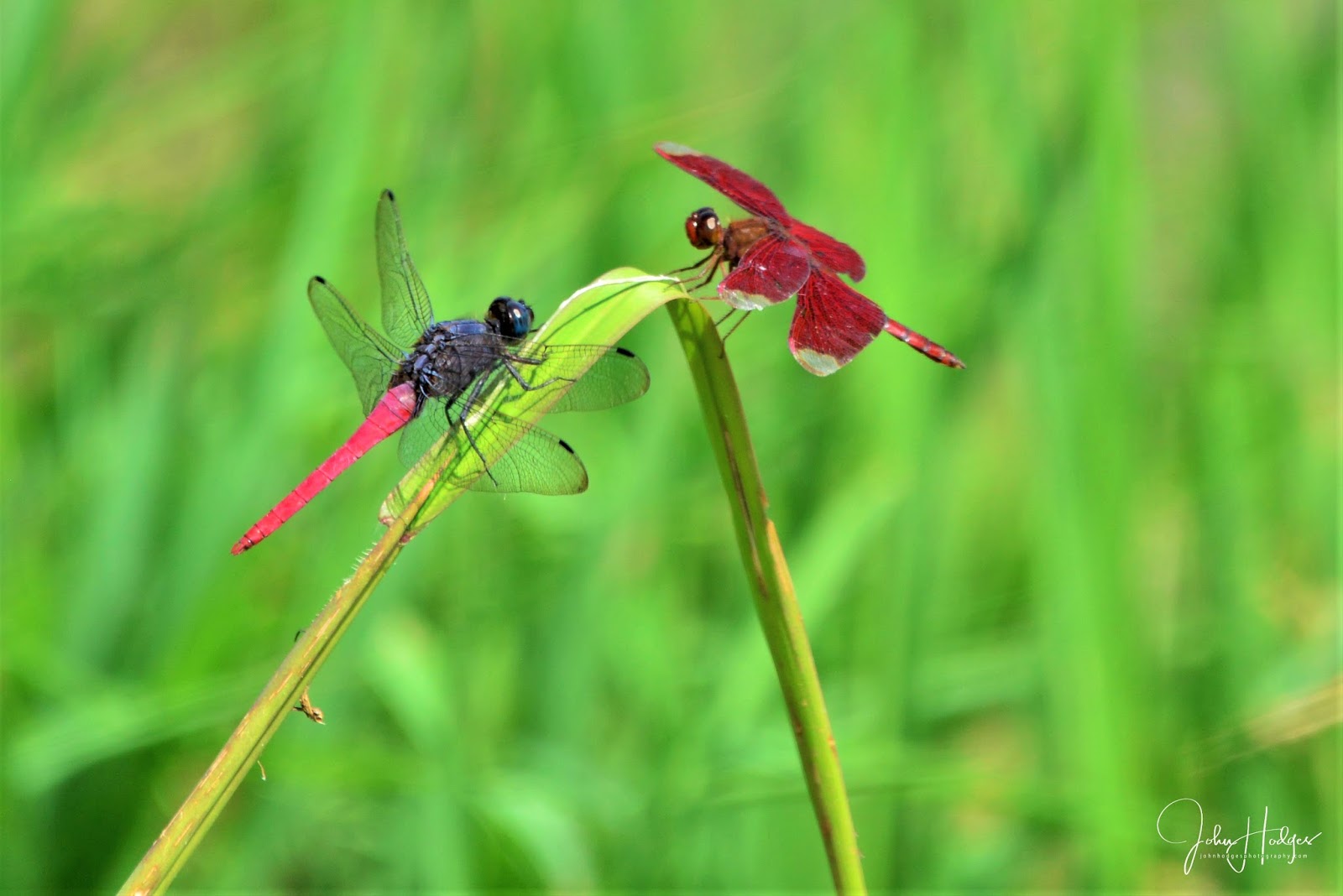
Errol and I continued chewing over my theory, playing devil’s advocate and strengthening the case. My cameras were kept busy by the huge selection of dragonfly species. Ancient and fast, delicate, winged killers in all shapes, colours and sizes, darting around our feet and heads, checking us out and testing my photography skills to the limit. If ever I was to discover a new species it was most probably among these four-winged killers.


Species to be identified
These amazing dragonflies floated and hovered a metre in front of my face, exactly at eye level, darting in and out, coming back again and again, coming in for another look. Did their compound eyes that were sending messages to their brain ever wonder about us, these sweaty, strange creatures before them? Were thoughts being generated in brains made of a few atoms? This is the kind of a natural mystery that makes me drool. Science for years has said ‘impossible’, but the more we observe the animal kingdom the more we discover that consciousness may not be limited to just a few select higher mammals, such as ourselves, some primates and whales. We are finding that many bird families, octopus, and let’s not even start with our family dogs, have advanced communications, share ideas and even pass on knowledge. This means they have an idea of whom and what they are, also planning and manipulating the world around them through tools and even teamwork. By discovering we are not the only smart ones here, we are also evolving to be smarter ourselves. My dream would be that one-day humans could emulate the fictional character from the 1967 movie Dr Doolittle and talk with the animals. If that day ever happens though, humanity will recoil in horror when our fellow life forms and ultimately our family on the planet will shame us with horror stories about our behaviour and treatment of the creatures of this world. It would change humanity as a species forever and could save us from a self-inflicted oblivion.

Species to be identified


Species to be identified


Common Flangetail - Ictinogomphus pertinax
As John Lennon famously sang “I’m a dreamer, but I’m not the only one”. As humans evolve to become more conscious, surely we must stop this abuse of the natural world and the wholesale torture and destruction of species. Whether it’s a farmyard animal, processed and carved up for the dining table or the blatant destruction of rainforest for palm oil for our white bread, junk food diets. This is the only place we all have to live, the rent is going up and there is no more parking. Mankind it’s time to grow up, stop soiling ourselves and clean up our act. Rant over…..for now.
Richard Thorns and I checking photos
 Another hour passed in the hot sun before Lay Win gathered us up for lunch and a beer back at the ‘wedding village’. I’d completely forgotten about food, lost in my world full of flying dragons.

We had one more stop though. Lay Win earlier had promised to take us to a dirt path running parallel to the jungle where if we're lucky we might get a glimpse of the elusive Hoolock Gibbons we had heard earlier in the day, finger crossed.

When we arrived our driver pulled over and we walked along the edge of the jungle. Again we were surrounded by butterflies but unfortunately, the Gibbons were nowhere to be seen or heard. Oh well, it just means I have to add more butterfly photos to more expanding archive.

Asian Elephant - Elephas maximus
While Errol, Pilar and I were totally distracted by the glorious insects, a female elephant ambled up behind us, ridden by her mahout. Lay Win informed us that the elephant will be joining us tomorrow in the marshlands of Naung Khwin and the beginning of our explorations of this habitat.


I just love elephants, always have, and always will. When you look into an elephant’s eye close up you can see into a conscious, knowing being. I can almost imagine their stories full of wisdom that they could whisper in my ear. Stories of hard lives and some torment but also of family and love, just like the human story.

The elephant grass and marshland of Naung Khwin is a historical place for sightings of the Pink-Headed Duck. It all sounded good, we would transverse this hostile environment with the assistance of Elephants trying to flush out resident ducks and hopefully our intended quarry. It was all very romantic and very Victorian but it made sense, these habitats are almost impenetrable and a great place for a lost species to hide from the modern world.

Using elephants is something that didn’t settle well with me, Pilar and Errol and I have actually campaigned against such use of these emotional and intelligent animals for the jollies of tourists. I kept telling myself that this was for science and conservation and if we make important discoveries the future of this whole environment can and will be conserved.

My justification for the greater good, please forgive me Mrs Pachyderm.

We took some photos of the team with the beautiful, grey lady, I kissed her trunk and promised to see her tomorrow.


Meeting with the elephant I'd be working with
We then finally left. We had a much hungered for and delicious lunch in the ‘wedding village’ before heading back to Lonton and our lodge. What awaited us were cold, insect-filled showers and a couple of hours downloading photos, archiving, writing up notes, charging camera batteries and then an evening out with Richard and Errol who are both football addicts. They’d located a bar showing some English soccer games much to their joy. A bottle of Mandalay Rum had been purchased; it could and would get messy.

I leave the story here, mostly because I can’t remember too much of the evening. But apparently we all behaved with class, style with lots of suave sophistication; well that was me, not sure about the other two. At no point did anyone fall over in a ditch, no one died and we didn’t make the local news.

I still don’t know the football results!

Saturday, 9 December 2017

The Search for the Pink-headed Duck commences

24th - 25th Oct 2017 Lonton Village arrival

Very weary from the seventeen plus hours of beating and pounding administered by our ancient train we were very relieved to be shown to our lodge in Lonton village opposite Indawgyi Lake at about 02.30am. On first appearances, everything seemed fine, basic but clean but then we were informed that the accommodation had no bathrooms or shower units apart from the rickety hut with a squat toilet, a ‘hold on for your life’ loo and an outdoor bucket shower next to the main road.

Outside appearances can be deceptive, all facilities 'al fresco'

This wasn’t exactly what we had been promised. If we had been told it would have been a different matter and to be honest Pilar and I have been accommodated in a lot worse conditions. It seemed, as we were to find out, the rooms we had actually paid for were across the road at the Indaw Mahar Guest House.

Our intended Lodge that had been occupied by the Germans!

It appeared that we had been downgraded to make way for the German Ambassador and her team who were arriving in five days to open a newly constructed Flora and Fauna International (FFI) education centre on the shores of the lake. The Germans were invading and we might have to fight them on the beaches for our rooms!

After a few heated words with the organisers of the expedition, we were assured that if we could stay just the one night in our current accommodation we could relocate in the morning. We caved in out of sheer exhaustion, brushed our teeth and crashed into spent oblivion.


(Tourist map of Indawgyi Lake)
25th Nov 2017 Search Day 1

After an average night sleep and a quick breakfast of sorts, we threw our bags over our shoulder and crossed the road to our luxurious, pre-booked residence for the next 5 days.

What can I say about Indaw Mahar Guest House without sounding spoilt, bitter and cruel? Well to honest, it left a lot to be desired and I will leave it at that just to be polite. At least we had a shower and toilet, of sorts.

Our guide, the ever smiling and chilled Lay Win had organised our first exploration of the famous Indawgyi Lake. We were to make the hour crossing to the very northern point of the lake and then another hour through the Indawgyi river marshes.
                                                                          
  
Our mode of transport was a locally made wooden longboat with a motor at the stern. The longboat was approximately 30ft in length and looked as stable and watertight as a long sieve. Errol and I again exchanged all knowing looks, no words were needed. Jungle Pili or Pixie, as Errol had nick-named her, held back and prepared her camera for any comical mishap while the rest of us climbed aboard. Myself, Errol, Richard, Lay Win and finally Pilar slipped and stumbled our way on board and took positions. Our initial fears were totally unfounded as we took off north across the lake; the water was like a shimmering pane of glass.


For the first time, we could see the jungle bordering the shores. Deep shades of greens and browns blanketing the hills interspersed with small villages, pagodas and temples. The religious shrines, rich with hues of red, blues and gold all magnified in their brilliance by the shimmering morning sun. As the morning wore on the heat started to rise and only the air rushing past us stopped the temperature becoming uncomfortable.


One of the many pagodas along the shores of the lake

“Where are the resident water birds?” asked Errol

I had noticed the same thing and already it was apparent all was not right with the ecosystem we had come all this way to explore. We were both expecting and eagerly anticipating a rich and diverse spectrum of bird species. All we were seeing were a few Small Cormorants and snow white Cattle Egrets, a Pond Heron here and there, common and adaptable species found on most freshwater systems.

The naturalist in me started to look for more clues as to exactly what was happening here.

“Errol, look at the water,” I said

We looked over the side of the longboat and saw an obvious problem. The water was thick with blue-green algae everywhere we looked. Visibility was no more than one meter in the water column and it was a green, lifeless void. We also found small dead fish every meter or so floating on the lake surface with no visible trauma or other cause of death. It appeared the lake was turning acidic and the life-giving oxygen was being starved out of the system, I've seen similar conditions even in my local lakes back home!


Looking both port and starboard blue-green algae in the water and not a 'duck' in sight

The most dominant species of plant was the beautiful Water Hyacinth which was floating in rafts across the entire lake, some were small and some of them were huge tapestries of lilac and green. I started to examine them as we glided past, looking for amphibians and invertebrates, the usual species of dragonflies, pond skaters and frogs that you’d expect on a healthy lake…..nothing.

Myself, Errol Fuller, Richard Thorns, Lay Win
The lake itself, to the untrained eye, is serene and picturesque; the jungle forest also looks vibrant and healthy. But both Errol Fuller and I agreed it is all an allusion. The jungle is second if not third growth, harvested for its hardwood and animals long ago. What is left is the occasional old, towering tree, usually, its survival is because it had happened by chance to have started its life on a steep hill or in a swampy area, both of which are difficult to cut and extract a tree of such size without modern and expensive equipment. The rest of the growth is made up of bamboo, young, fast-growing trees all smothered in a blanket of climbing, clinging vines and ivy. Sure you’ll find animal life in and around, species that have adapted quickly and that are resourceful. But nothing like the biodiversity a true, old growth pristine system can support.

My personal opinion is the water habitat and its biodiversity is heading toward collapse. Of course, this needs to be studied further with scientific vigour applied, this opinion I have come too is my own personal observations. I did test for the ph levels in several places in the open water and the marshes and the initial results confirmed my hypothesis.

The population on the shores is much larger than we had expected or had been lead to believe. These poor people, after coming through years of oppression and hostility, are trying to take advantage of the new gold rush: tourists. The little town of Lonton is all shops and basic restaurants to cater for the growing list of international visitors and scientists. The shops sell alcohol, sweets and junk food and locally source meals, mostly cooked in palm oil. If you’re a meat eater, your meals are running around and living with the population in the street: pigs, chickens, cows, dogs are everywhere. Not that this bothers us in the slightest, in fact, I could often be found rubbing a sleeping pig’s belly while kneeling in the powered, grey dust that covers just about everything.

The problem arises when you consider that all the water used for this growing civilization comes from and goes back into the lake. Cooking water, washing up water, toilet and shower water, all full of chemicals and bacteria. This and the slow depositing of layer upon layer of rotting vegetation, raining through the water column from the drifting reed beds are turning the lake acidic. Another problem is that historically this lake has been fished by the locals to sustain their families. But now with the rising demand from an expanding marketplace, the fisherman are depleting the fish stocks, fast. Not only are they fishing with traditional method, nets, lines and wicker traps, but they are also utilising modern technologies such as electrofishing, this probably explains the dead, floating fish we saw on the lake. This once pristine Eden and possible home to the Pink-headed Duck is being attacked from all sides and it’s losing the battle for existence.

The big question is, does or could the Pink-headed Duck still uses this lake?
Did it ever actually live here, or was it a very occasional visitor?

You’ll have to read on to find out these answers and you might be surprised at our conclusions.

Approximately one quarter across the lake and not that far from the shore side village of Lonkauk, rising out of the silky water is the famous ‘Shwe Myitzu Pagoda’ or as most tourists prefer to call it the ‘Floating Pagoda’. I believe it is home to a small group of devote Buddhists Monks.  To my cynical eyes, it looks like a wedding cake designer’s worse acid trip. Obviously beautifully crafted and designed with no expense spared. Layers upon layers of gold conical spires with extravagant ornamentation contrasted and framed by rich red borders and frames. The gold faced Buddha is housed in a glass-fronted room gazing out, unblinking for eternity across the waters of the lake.


‘Shwe Myitzu Pagoda’ the 'The Floating Pagoda'
 Above the doors, written in English and Burmese are the words RUBY DRAGON. I would imagine this is where the tourists hand over their dollars for the privilege of being in the presence of the golden one. The significance is mostly lost in my ignorance, but once again I’m reminded of the extraordinary wealth that can be spent in the name of religion while the local people live in squalor and ignorance. I wonder how many children could be given an education and a chance to build a better future for themselves with the money spent on such a structure. I know one thing for sure, no matter what flavour of God we talk about they all seem obsessed with money and gold. He might move in mysterious ways but I bet he has an accountant!

Right, after offending another deity and again securing myself an eternity in a fiery hell (I hope they have cable TV so I can fry while watching David Attenborough), I’ll get back to the expedition.

Our purpose for crossing the lake was to go up the Indawgyi River, through the reed beds, keeping an eye out for our quarry to arrive at ‘Chaung Wa’ village where we wanted to interview one of the local villagers as to a suppose sighting he had six years previously (more details to come regarding the interview).

Typical fishermen's hut
The reed beds along the river system were tall and dense. Scattered along the water line of the river were fisherman shelters, on stilts, made from bamboo and dried and woven reeds, primitive but functional, somewhere to sleep, eat and shelter from the searing sun.

For such a large habitat the species count we observed was disappointingly low. I observed and photographed common species such as White Throated Kingfisher, Pond Heron, Cattle Egret, Little Cormorant, White Wagtail, Little Grebe, a lone Purple Heron and one of my favourites the Purple Swamphen. What was really alarming, not a single duck, not a Mallard or Pochard, in fact not a quack.

Little Cormorant
In the skies above the marches and reed beds circled a number of Brahminy Kite and a solitary Hen Harrier. We also saw migrating Amur Falcons circling way above all other birds, specks against the blue sky. The Kites are common in S.E. Asia and I never get bored of seeing them. The snow white head of the mature Brahminy Kite contrasts strikingly against the chestnut body and wings. What exactly they were hunting I was unsure, probably fish, snakes and small birds but from the look of things, pickings were scarce. They seem to have filled the niche left by the many Vulture species that have been decimated by the widely used veterinary non-steroidal anti-inflammatory drug, diclofenac, during the last decade. 

Brahminy Kite
Black Kite

The population of vultures has crashed via a slow painful death because this drug been injected into livestock. These important scavengers fed on dead livestock. Vultures die from kidney failure within days of exposure animals with diclofenac-contaminated tissues. Many species are now on the edge of extinction. Have we learned anything? The simple answer is no. The ban may now be in force across Asia but now the drug is being used on the African continent and with the same devastating results.

Eventually, after an hour navigating the river through the reed bed, we started to see habitation along the river banks. Houses built on stilts, livestock roaming free along the banks, the fisherman in their longboats mending nets or using the river as a highway to deliver food and fuel to the village. Children, barefooted and in modern but ragged clothes greeted us with shouts, waves and broad, white-toothed smiles.


“Hello mister, hello” they all cried, we felt like arriving celebrities.

Not everybody was so friendly. Women bathing in the river or pounding clothes, beating out and endlessly rinsing to wash out the muck and grime gave us unforgiving glances from underneath sweaty brows. A pang of guilt gripped my heart.
These people cling to a moment by moment existence with no chance of reprieve and hear we were loaded down with expensive technology looking for a duck which would mean nothing more than the next meal for them. A sudden dose of reality and perspective is a humbling and lonely tune played with a conscious heart.

A local greeted us and pulled our longboat onto the shore, sliding it into the mud. We disembarked unsteadily and walked the few metres into the centre of the village. There were stalls surrounding the village square selling everything from locally grown fruit and veg, raw spices, lots and lots of sweets and water bottles filled with two-stroke petrol. 


Everything was happening at half speed and surreal in the village. There was no haste or rush to be seen, no hard sell and certainly no customers for the colourful and varied wares. We had needed special permission to visit this remote village of fishermen because it was in the zone where the KIA still operated. But all seemed relaxed. Feral cats slept in the baskets, dozing alongside strangely named cleaning products, sleeping away another hot, dusty day just like most of the villagers it seemed.


I did make a purchase, a large bottle of chilli sauce, it seemed the thing to do and can be a lifesaver if the local meals fell below culinary standards. Ok I’m an addict….but I can give it up, if I want, honest.

Interview Chaung Wa village 

We convened in the town square bar consisting of half a dozen tables, some wooden benches and a scattering of plastic chairs. Richard made enquiries with the head man of the village about a fisherman he interviewed during a previous, solo expedition who had claimed to have seen the Pink-Headed Duck in the local reed beds some six years previously. Out of nowhere a guy arrived and introduced himself. It turned out that the individual was not the original interviewee but someone who had been there at the same time as the mentioned interview. He was now claiming to have also seen the duck some nineteen years ago. Why he failed to mention this previously was beyond me, but we questioned him anyway, I listened to Lay Win translation of the conversation as I recorded the whole interview on my Nikon D800. We also handed out some laminate species I.D. and contact cards I designed offering a reward for information to the existence and whereabouts of the PHD. I expected more enthusiasm if I’m honest, especially as these people claim to have seen the duck in the local waters.


After a cold Mandalay beer, we left with handshakes and goodbyes. Richard seemed enthused and encouraged, myself, Pilar and Errol were however underwhelmed, to say the least. Lay Win said nothing, just his normal serene self, smiling warmly; he’d been here before chasing pink ghosts.

As we were about to leave the village, a platoon of heavily armed government soldiers marched through the village. They smiled at us while brandishing their bullets belts and AK47’s, and strode on past, where they were going we had no idea and we certainly were not about to inquire, it was a sudden and sobering reminder of exactly where we were.

we didn't ask questions, a true reality check

The journey back through the marshes was uneventful, we saw the same species sporadically and the hour across the open waters of the lake have again confirmed the peril the lake was in. We were treated to a beautiful, golden sunset that turned the skies a burnt umber as the sun dripped and slid below the hills surrounding the shores.

Pilar of the lake

perfect end to a long day


The team
Back at our palace (lodge) we all showered and made a hasty dash to the local restaurant that Lay Win had arranged for us. With some translation issues, Pilar and I were served fried watercress, fried peanuts and white rice. Richard had some form of a spicy meat dish and rice and Mr Fuller started his diet of chips and beer, explaining that we were all going to regret not following his dietary lead, the chips had been cauterized to near death and therefore safe to eat. Time would tell if he was right.

Our starving team wolfed down our meals with a couple of cold beers and made arrangements for a dawn start and the second day of our search before hitting the hay.