Showing posts with label GMO. Show all posts
Friday, 23 November 2018
Friday, 8 June 2018
Is our Green and Pleasant Land Falling Silent?
Most days I try to spend a few hours in the local countryside, wherever I may be located at the time, exploring and absorbing the riches of the natural world. All life fascinates me, the individual species and the interconnected relationship that build a web of intricacy we are only just starting to understand.
These experiences I've cherished for as long as I can remember. Growing up, my parents spent time with my younger sister and I pointing out the plants and animals and teaching us to respect all life. Later on when I discovered the sciences and great teachers on TV like Carl Sagon, Sir David Attenborough and Sir Patrick Moore. I was inspired, filled with wonder and ambition to understand and see with my own eyes as much as possible while experiencing this brief moment, conscious and alive on this little speck of a green and blue planet.
Those early and profound influences have never left me. I wouldn't change my passion and connection to the natural world for all the worldly riches and toys that most desire. When I'm immersed in nature, whether in the jungles of Borneo or in a meadow in my native Worcestershire, my heart is full and I stride like the richest man on the planet, truly alive and connected. I wish all could experience the same emotions.
Which brings me around to the very point of this blog post.
I'm the bearer of bad news I'm afraid. Some will be surprised by my conclusions but I'm sure most of you won't be. The voices of alarm have been loud and clear for those paying attention.
For many years I've been talking about, some would say ranting about the disappearing bio-diversity and the falling population numbers of our native UK wildlife. This is well studied by the scientific community and they are all in agreement.
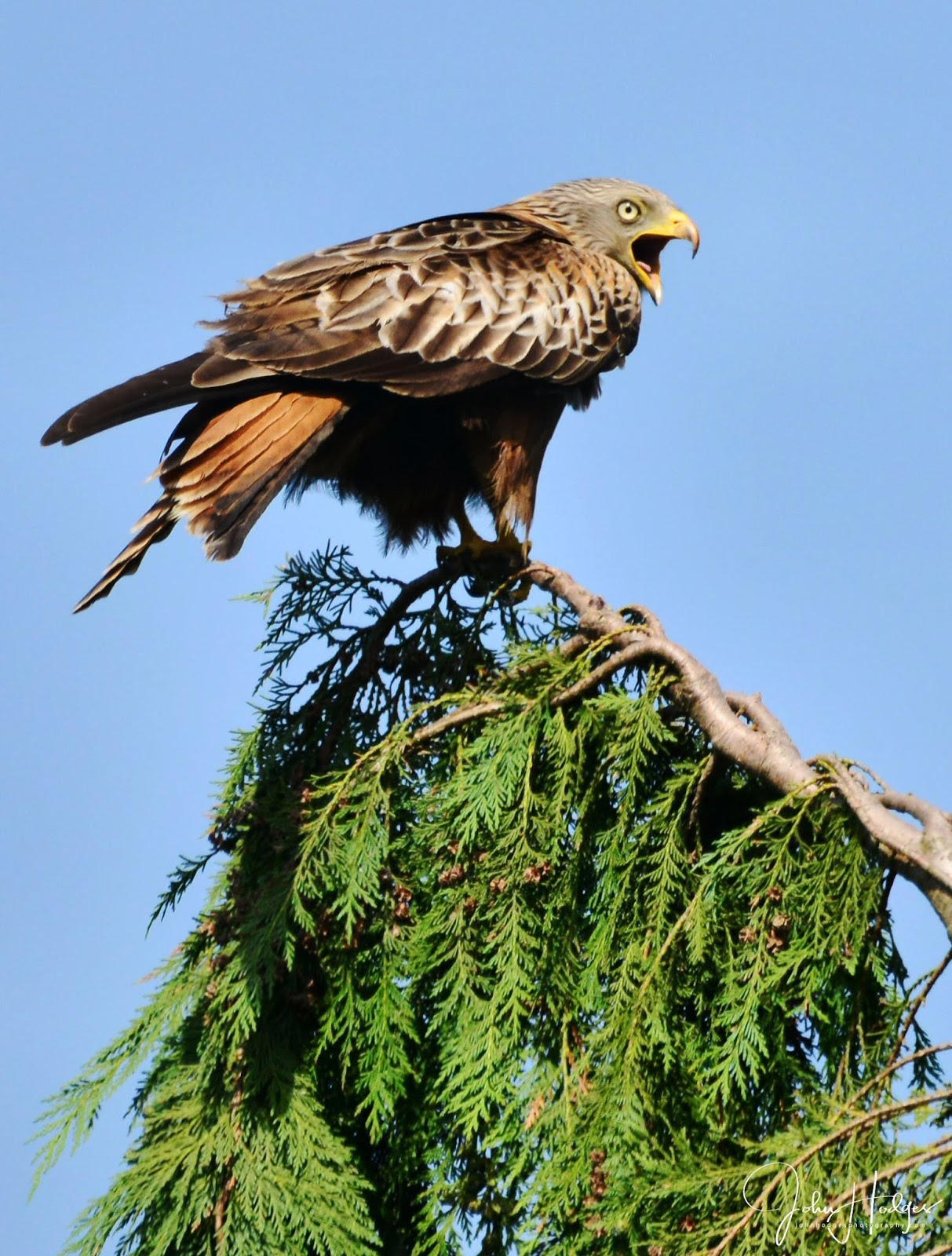
Of course, some species are doing better than others. For instance, the Common Buzzard and Red Kite have made a remarkable comeback across the country. As a boy, if I'd have seen either bird I'd have lost sleep through excitement for weeks. A change in some farming practices and focused conservation can take full credit for these success stories.
Red Kite - A UK conservation success story
But where there are winners you have to have losers and they vastly outnumber the victors. The once common species that I grew up with like the beautiful Yellowhammer that filled the countryside with its plaintive call is all but now gone. The flocks of acrobatic Lapwing that occupied our farmlands are conspicuous by their absence. Ratty the Water Vole that used to inhabit every stream and waterway has become a symbol of our loss. Declining Farmland Bird Species
The summer days of my youth where the hedgerows, woodlands and fields were alive with delicate but fiercely territorial butterflies shimmering in sunlight while bouncing off each other defending the best pieces of habitat are fast becoming faded memories. Even our wildlife-friendly garden that has been planted and designed deliberately to attract as many species as possible now, in contrast to long past years, is an empty refuge for the few remaining visitors.
Here's a list of the butterfly species that should be a common sight at the time of the year. How many have you seen? UK Butterfly species on the wing in June
The species I mentioned above, when now encountered, become part of my 'memorable day species' list.
How and why has this happened?
The answers to the above questions are many and complex. But some are obvious if we open our eyes.
Just this morning while walking just after dawn with a good friend and fellow naturalist in the rolling, lush countryside near my home. The countryside was all but silent. When the classically and rich English dawn chorus that you've been used to is missing, the silence rings in your ears. This is not new to me at all, unfortunately. This is a now common observation.
An insect desert where it should be an oasis
The farmland adjacent to the mixed woodland bordered by a 5-metre strip of grassy verges should have been alive with basking insects, charging up their metabolisms with the warmth of the morning sun. We saw nothing at all, not a single beetle, moth or butterfly. Again this is becoming a common occurrence. Even recent visits to my local, rich flower meadows which were a favourite butterfly patch have yielded very few insects or birds where once there were many.
The use of herbicides and pesticides has become more and more widespread. The dead and yellow grasses line fields, parks and roadsides, eventually turning to dust and blowing away. These are vital habitats for our invertebrates which in turn feed our small birds and mammals, they now lie withered and devoid of life.
Don't we use our sciences well? (note the sarcasm).
The glyphosate residue found in processed bread alone is terrifying, lucky us eh? After finding out this hidden scandal we make our own poison free bread. Unbelievably I know people who actually spray the vegetables that they are growing and then serve them to their families, all in the name of healthy eating!!!!
More to come on this subject at a later date.
Where do you think all these poisons go? It all seeps, washes into our water aquifers draining into our waterways and enters the food chain affecting all species and that includes us. We are literally soaking our lands in poisons and all for convenience and of course to maximise profits.
The farming community is under huge pressures to keep solvent while under attack from cheaper imports backed by monopolising trade deals. Sure the farmers are subsidised by our governments, but why are we importing grain, fruit and vegetables in the first place? We live in the garden that is our home.
Trade deals are undercutting our farmers and are being supported with backhanders from Big Agra and all the lovely GMO biotech industries. We are having the very land we live on and our food security compromised for profits. This is having a massive influence on how our countryside is being managed. The poor farmers have little choice than to use poisons to wipe out insects that attack the valued crops. The margins are so slim and hang in the balance every harvest that the risk outways the negative effects, at least in the short term. This trend is happening all over the agricultural world.
Our wildlife shut out by agriculture
A blatant plug here. For more in-depth info on what is happening with our food chain I highly recommend the three book series by my colleague Mark Plummer, you can find his work here or you can contact me for a FREE review copy of any titles in our book catalogue.
Another upward trend I've observed is the increased persecution of our wildlife. It seems to be coming down directly from our governments. They offered the people after a long fought campaign a fox hunting ban but rarely, if ever, enforce it. Recently a £50.00 bounty has been put on the head of every badger in the country (see recent articles here and here). The list of cruel and senseless persecution seems to be growing, they even want to cull our Raven!!
In the last 24hrs while walking the same route described earlier we came across four dead Pheasants, the feet of two separate Roe Deer plus lots of fur in the long grass. We also even found a dead Kestral, a protected species blasted out of the sky and like the other pointless victims left to rot where they fell. Just senseless killing for killing sake is a human trait I will never understand.
We saw more dead than alive animals during our walk and it just breaks my heart. The wholesale slaughter of the planet wild inhabitant seems to be running out of control. At this point in our history and if we make it into the future we will be defined by our bloodlusts and stupidity. But I have a feeling that mother nature will have her say long before we get to the distant future and hang our heads in shame.
As my favourite comedian, the late Bill Hicks defined us, "we are a virus with shoes".
The above testimony is only scratching the surface of the biological crisis we are now facing. The seas are full of microplastic and industrial chemical runoff. Our forests around the world are being ripped out of the ground, slashed and burnt, leaving the once majestic treasure houses resembling a post-nuclear wasteland. What for? For plantations producing mainly genetically modified monocultures that go mostly to feed livestock to supply our fast food outlets and western junk food lifestyles.
Ban Palm Oil PETITION UK
Remember this?
All short term and not sustainable while we tick off species after species that disappear into the infinite night of oblivion.
I firmly believe we have reached or are very close to a tipping point of bio-diversity collapse. Can we turn it around? Maybe, but we collectively need to act now. No more corrupt agenda driven arguments, meetings, roundtables and conferences and most of all denial and ignorance. We need action now and the corporations that have natures blood on their hands need to be held accountable.
But it doesn't stop there. We can make a difference and force the hand of change.
If you want to make a difference please educate yourselves as to where your money goes. If you're buying products that contain palm oil, GMOs etc find better, cleaner products, they are out there and becoming more available.
On a Saturday afternoon if you've been taking the easy option of using Roundup instead of working up a sweat to remove the weeds on the drive, ditch the poisons and get a little sweaty. Boycott these evil corporations that lie, deceive and poison us all. Take the money out of the system and the criminal companies will have to adapt and give us ethical and safe products or they will fail. The all-important stockholders will not let that happen I can assure you but we have to apply constant financial pressure for them to change. The same applies to your vote at elections. Ask the people who put themselves forward as our voice and representatives to be accountable. Check the voting records and demand disclosure of financial records before you place your votes.
Demand it, it's your human right.
These simple methods, flexing of our intellectual and personal sovereignty have true power, we've just seemed to have been distracted and forgotten that these people work for us.
Changes in our spending behaviour will help your personal health and the long-term health of your local environment, it's all in our hands and the choices we make. We all need to lead by example and don't settle for other faceless people deciding on our future. Start in your local area by collecting litter when you walk the dog or take the kids to the park. Nobody likes to see litter but how many actually take responsibility and clean it up? Don't wait for others to do this vital and dirty work.
Here's a great example of someone I know making a difference to our local area, day in day out she's out cleaning up OUR planet, unpaid and voluntarily because she wants change. We all owe people like this a huge debt. Be inspired and lead by example, put a carrier bag in your pocket and piece by piece we can start to clean up this mess of our own making. I never leave home without a litter bag.
Ignorance is no longer a valid excuse, we all have access to the internet or know someone who does. We can't stick our heads in the sand any longer and pretend this isn't happening on our watch. If we don't start to collectively act it will be at our own peril. We can make a difference and learn from our collective stupidity. It's all our fault we've found ourselves here. It's time to admit we're wrong, it's a good thing as it leads to undeniable truth.
For a lesson from history check our Rachel Carson famous book Silent Spring. First published in 1962 alerting the American public about the effects of pesticides and especially the now-banned DDT. Don't let history repeat itself.
Thank you for reading my impassioned rant
John Hodges (a concerned naturalist)
#WeWantWildlife #SaveOurSpecies #DemandCleanFood #BiodiversityFirst #ActNow #BeAWomble
Labels:
Bayer,
biodiversity,
Chris Packham,
Conservation,
eco collapse,
Extinction,
food security,
GMO,
Green Philosophy,
Monsanto,
natural history,
pesticides,
Springwatch,
The Dodo
Thursday, 31 May 2018
'The Great Awakening'
A Journey to Dietary Enlightenment
by Mark Plummer BSc / PGCE
Before late 2015 I had no real idea how nefarious the global processed food industry really is. Sure, I knew a bit about Genetically Modified Organisms (GMO’s), a spectre I’ve been following since the mid-1990’s. Even so, I had no idea as to how the modern food business operates, not so 3 years later.
Having spent some time researching its machinations and objectives it is not hard to see why food manufacture in the modern age is so steeped in secrecy, double-speak and dis-information. It is also not hard to see why they want to keep it that way too. One thread of how this three book series came together takes me back to my late teens and early twenties.
Through my university days, I learned about organochlorine or halogenated hydrocarbon compounds. Perhaps the most infamous of these is the compound di-chloro di-phenyl tri-chloro-ethane (DDT) and a family of chemicals called poly-chlorinated bi-phenols (PCB’s). I learned about how they were used as pesticides and in industry respectively. I learned about their temporary success in pest control, but I also learned about their devastating long-term environmental impact. I learned of how insects evolved resistance to the poisons they were coming into contact with. I learned of how insect resistance is what drove the manufacture of ever more organochlorine pesticides.
To date, many hundreds of these compounds are cycling their way through the planet and its biosphere. These substances may well be chemically unique compounds, but they all have the same broad devastatingly irreversible environmental impacts, irreversibility being one fundamental reason to oppose GMO’s. If the chemical companies really cared about “the environment” such substances would not have been manufactured in anything like the quantity or varieties they have been. The same goes, but for different reasons for glyphosate (trade name Round-Up) and neonicotinoid (the bee-killing) pesticides.
DDT sprayed liberally in the 1950’s and 1960’s
Later in the mid-1990’s I read of GM soya being grown across the pond in the US and Brazil. I also saw how the industry was making inroads into the Far East, particularly in China. At home, here in the UK, I saw the flavr-savr tomato come onto the supermarket shelves and then within months I saw it come off them again! This was 1995-6 when the nascent new labour opposition headed by Tony Blair was successfully duping the country and its people (me included) into thinking it was some sort of alternative to the hated conservative party, headed by the equally loathsome John Major.
Anyway, Good old “bomber” Blair gets elected in 1997 and things were supposed “to get better” were they not? Clearly, they didn’t! For me the rot set in over the academy programme, university tuition fees and the continuation of privatisation along with a general realisation that New Labour was, in essence, the same as the conservatives. Simultaneously, I was not happy about British involvement in Sierra Leone, Liberia and Kosovo. At the time I was not in the least bit informed about any of this. I was far too busy enjoying myself! I knew there was more to what “I was being told” and I never lost sight of the environmental knowledge I gained at university. Yet, I was losing “the argument” on these and other matters because I just didn’t know the nuts and bolts of what I was talking about.
A set of circumstances I am pleased to say no longer exist, at least in the areas where I profess to “know my damned onions”. Yet, it still took Afghanistan and Iraq to really catalyse my thinking and catapult forwards to where I now politically, philosophically and ideologically reside.
I learned that Monsanto was involved in the production of compounds such as DDT and the other chemicals mentioned above. I learned of equivalent involvement in the production of Agent Orange and later how the British army also used in Malaya. I saw the clear ideological links between what was, and still is, going on in the Middle East and Central Asia and equally criminal imperial ventures such as South East Asia and Chechnya. On the back of Iraq and Afghanistan, I learned of the sordid history of Western and other forms of Imperialism. Plus, the totality of lies, deceit, hypocrisy and destruction that goes with it all. I was and still am appalled over the hypocrisy around Colonel Gadhafi’s Libya. For a time that particular dictator got his oil swap Lockerbie points. He also caused through arms sales from the UK (and other countries) untold suffering to people all over Western Africa. The list of crimes wrapped up in all of this and more is as endless as it is well documented, all the reader has to do is look.
Anyway, Good old “bomber” Blair gets elected in 1997 and things were supposed “to get better” were they not? Clearly, they didn’t! For me the rot set in over the academy programme, university tuition fees and the continuation of privatisation along with a general realisation that New Labour was, in essence, the same as the conservatives. Simultaneously, I was not happy about British involvement in Sierra Leone, Liberia and Kosovo. At the time I was not in the least bit informed about any of this. I was far too busy enjoying myself! I knew there was more to what “I was being told” and I never lost sight of the environmental knowledge I gained at university. Yet, I was losing “the argument” on these and other matters because I just didn’t know the nuts and bolts of what I was talking about.
A set of circumstances I am pleased to say no longer exist, at least in the areas where I profess to “know my damned onions”. Yet, it still took Afghanistan and Iraq to really catalyse my thinking and catapult forwards to where I now politically, philosophically and ideologically reside.
I learned that Monsanto was involved in the production of compounds such as DDT and the other chemicals mentioned above. I learned of equivalent involvement in the production of Agent Orange and later how the British army also used in Malaya. I saw the clear ideological links between what was, and still is, going on in the Middle East and Central Asia and equally criminal imperial ventures such as South East Asia and Chechnya. On the back of Iraq and Afghanistan, I learned of the sordid history of Western and other forms of Imperialism. Plus, the totality of lies, deceit, hypocrisy and destruction that goes with it all. I was and still am appalled over the hypocrisy around Colonel Gadhafi’s Libya. For a time that particular dictator got his oil swap Lockerbie points. He also caused through arms sales from the UK (and other countries) untold suffering to people all over Western Africa. The list of crimes wrapped up in all of this and more is as endless as it is well documented, all the reader has to do is look.
From the Horse’s mouth in 2001 – Nothing has changed since then!
The key point of this article is the realisation that the same companies and institutions that were pushing for war in the Middle East, were the same companies who made the types of chemicals mentioned above. They were also involved (and still are) in the drive to implement GMO’s in agriculture all over the world. A point outlined with Specific reference to Iraq in chapter 6 of the Introducing GMO's book.
For instance, here in the UK a company called Rothamsted Research is well embedded with various forms of GM crop, but also has a direct historical connection to developing poisons such as Agent Orange as weapons of war. And it was for reasons such as this that the fundraising job mentioned in chapter eight of the GMO book comes to its forte.
In 2003 ONE reason for opposing GMO’s in agriculture was realising that a company such as Monsanto, with its sordid history, really ought to have no business in telling the world what is good to eat and what is not. In 2018 nothing has changed! Exactly the same goes for ALL other transnational corporations involved in GMO’s. The "Introducing GMO's" book gives countless additional examples and provides links to plenty more.
For instance, here in the UK a company called Rothamsted Research is well embedded with various forms of GM crop, but also has a direct historical connection to developing poisons such as Agent Orange as weapons of war. And it was for reasons such as this that the fundraising job mentioned in chapter eight of the GMO book comes to its forte.
In 2003 ONE reason for opposing GMO’s in agriculture was realising that a company such as Monsanto, with its sordid history, really ought to have no business in telling the world what is good to eat and what is not. In 2018 nothing has changed! Exactly the same goes for ALL other transnational corporations involved in GMO’s. The "Introducing GMO's" book gives countless additional examples and provides links to plenty more.
The second book in the series concerns the mass production of bread here in the UK. It grew out of an original idea to look at additives and food processing in general. I soon realised that developing an “additives database” was a reinventing the wheel exercise. So I decided to focus on a staple of the British diet, the humble loaf of bread. What I found out in the course of putting that book together should put any rational human being off ever eating mass produced bread of any kind again.
Bread by definition is made by mixing flour, yeast and water together in the right proportions and then following the instructions for kneading, rising and finally baking into the final loaf. Bread produced through the Chorleywood process is not made in this way. All the reader has to do is look at the ingredients in any supermarket loaf. The how what and why of those ingredients form the bedrock of “The BIG Secret - What Happened To Our Bread?" book.
On the back of that writing, we have invested in a bread maker. We use a simple Panasonic SD2500 machine, with a recipe book, which right now is baking a 5 seeded granary loaf. It is made from flour, water, butter, yeast, sugar, the seeds and that is all.
Solely, from a bread perspective, if there is one thing the reader can do right now it would be to invest in a bread maker. For sure there is an initial outlay, which is going to be an issue if you’re on a budget. And finance is another point raised throughout the trilogy, it’s no good banging on about how terrible GMO’s and processed food is and then praising the virtues of whole or organic food if we have millions of people in the population who are barely getting by. However, our machine cost £100 and we spend on average about £15 per month on ingredients. The health, taste and nutritional benefits more than outweigh those costs. In any case, if you use your machine regularly and follow the recipes it will have paid for itself in about 2-3 months.
Another point is raised here and is made repeatedly throughout the writing. The ONLY reason people do not buy more fresh wholesome and the locally produced food is down to cost. In turn, the only reason proper food is so much more expensive is structural, i.e. mass produced food is cheaper than non-processed food.
The trilogy of writing uses examples from the real world to demonstrate this and chapter four in the “food additives” book uses examples from the life of yours truly. As with plastics and the processed food outlined in the third book, the only real answer is to overhaul how food and agriculture are organised all over the world. In many cases as with single-use plastic packaging and other items, the only REAL answer is to STOP making or producing it, a point raised in chapter 3 of the “Food Additives - The Truth” book.
This third volume also considers sweeteners in general and aspartame in particular. The same nefarious links mentioned above as regards GMO’s also apply to the most studied and arguably most controversial sweetener on the planet. As for sweeteners themselves, read the book, in fact, you can read that chapter first if you like, when you’re done if you keep ingesting sweeteners there really is nothing else I (or anyone else) can do.
Bread by definition is made by mixing flour, yeast and water together in the right proportions and then following the instructions for kneading, rising and finally baking into the final loaf. Bread produced through the Chorleywood process is not made in this way. All the reader has to do is look at the ingredients in any supermarket loaf. The how what and why of those ingredients form the bedrock of “The BIG Secret - What Happened To Our Bread?" book.
On the back of that writing, we have invested in a bread maker. We use a simple Panasonic SD2500 machine, with a recipe book, which right now is baking a 5 seeded granary loaf. It is made from flour, water, butter, yeast, sugar, the seeds and that is all.
Solely, from a bread perspective, if there is one thing the reader can do right now it would be to invest in a bread maker. For sure there is an initial outlay, which is going to be an issue if you’re on a budget. And finance is another point raised throughout the trilogy, it’s no good banging on about how terrible GMO’s and processed food is and then praising the virtues of whole or organic food if we have millions of people in the population who are barely getting by. However, our machine cost £100 and we spend on average about £15 per month on ingredients. The health, taste and nutritional benefits more than outweigh those costs. In any case, if you use your machine regularly and follow the recipes it will have paid for itself in about 2-3 months.
Another point is raised here and is made repeatedly throughout the writing. The ONLY reason people do not buy more fresh wholesome and the locally produced food is down to cost. In turn, the only reason proper food is so much more expensive is structural, i.e. mass produced food is cheaper than non-processed food.
The trilogy of writing uses examples from the real world to demonstrate this and chapter four in the “food additives” book uses examples from the life of yours truly. As with plastics and the processed food outlined in the third book, the only real answer is to overhaul how food and agriculture are organised all over the world. In many cases as with single-use plastic packaging and other items, the only REAL answer is to STOP making or producing it, a point raised in chapter 3 of the “Food Additives - The Truth” book.
This third volume also considers sweeteners in general and aspartame in particular. The same nefarious links mentioned above as regards GMO’s also apply to the most studied and arguably most controversial sweetener on the planet. As for sweeteners themselves, read the book, in fact, you can read that chapter first if you like, when you’re done if you keep ingesting sweeteners there really is nothing else I (or anyone else) can do.
Bread from the bread machine
Prior to 2015, I had no idea as to the depth of knowledge and research there is tied up under the word “nutrition”. I truly believed it was wishy-washy whimsical nonsense and certainly not as important as the global issues I constantly bang on about. Read the books to see what they are! I am pleased to inform the reader that I see how wrong I was. The domain of food and nutrition is just as hard in the science and politics department as the big self-inflicted problems we need to fix if we are to survive on this Earth.
Now in May 2018 I truly do understand what is meant by the term “you are what you eat”. Since 2015 we have made as many individual choices as we can. We have cut out as much processed food as we can and we have almost completely removed meat and fish from our diet. We have taken to using more pulses, beans, nuts and grains in our cooking. We cook from scratch as much as possible too and that is another action the reader can take. Get a cookbook, the best IMO, are the traditional farmhouse type. They have better recipes, better instructions and are more fun to use in the long run.
The only fly in the ointment here is single-use plastic. We pretty much get everything we buy in glass or metal containers. Another way to significantly reduce your plastic footprint is to stop eating meat and fish. Even so, our much re-used black bin bag becomes filled with various wrappers of grains, pulses, seeds, and other single-use packaging materials. Such is one consequence of living in a food desert!
About a month of single-use plastic in the bin bag!
So here we are then, this is the broad strokes as to where the box set comes from. My hope is that the reader will see the processed food industry and the drivers behind GMO’s for what they truly are. As a construct, it has no interest in promoting healthy eating, sustainable agriculture or nutrition. All it cares about is making cash at all costs, to the detriment of you and yours, everyone else and the planet itself. My hope is the reader will become empowered by knowledge and begin to explore and act upon the issues raised further.
Labels:
bread making,
diet,
Food Additives,
GMO,
Great Awakening,
green living,
healthy living,
home cooking,
immune support,
nutrition,
Smoothie,
Understanding GMO,
vegan,
vegetarian,
weight loss,
wholefoods
Subscribe to:
Posts (Atom)