Showing posts with label diet. Show all posts
Friday, 23 November 2018
Thursday, 31 May 2018
'The Great Awakening'
A Journey to Dietary Enlightenment
by Mark Plummer BSc / PGCE
Before late 2015 I had no real idea how nefarious the global processed food industry really is. Sure, I knew a bit about Genetically Modified Organisms (GMO’s), a spectre I’ve been following since the mid-1990’s. Even so, I had no idea as to how the modern food business operates, not so 3 years later.
Having spent some time researching its machinations and objectives it is not hard to see why food manufacture in the modern age is so steeped in secrecy, double-speak and dis-information. It is also not hard to see why they want to keep it that way too. One thread of how this three book series came together takes me back to my late teens and early twenties.
Through my university days, I learned about organochlorine or halogenated hydrocarbon compounds. Perhaps the most infamous of these is the compound di-chloro di-phenyl tri-chloro-ethane (DDT) and a family of chemicals called poly-chlorinated bi-phenols (PCB’s). I learned about how they were used as pesticides and in industry respectively. I learned about their temporary success in pest control, but I also learned about their devastating long-term environmental impact. I learned of how insects evolved resistance to the poisons they were coming into contact with. I learned of how insect resistance is what drove the manufacture of ever more organochlorine pesticides.
To date, many hundreds of these compounds are cycling their way through the planet and its biosphere. These substances may well be chemically unique compounds, but they all have the same broad devastatingly irreversible environmental impacts, irreversibility being one fundamental reason to oppose GMO’s. If the chemical companies really cared about “the environment” such substances would not have been manufactured in anything like the quantity or varieties they have been. The same goes, but for different reasons for glyphosate (trade name Round-Up) and neonicotinoid (the bee-killing) pesticides.
DDT sprayed liberally in the 1950’s and 1960’s
Later in the mid-1990’s I read of GM soya being grown across the pond in the US and Brazil. I also saw how the industry was making inroads into the Far East, particularly in China. At home, here in the UK, I saw the flavr-savr tomato come onto the supermarket shelves and then within months I saw it come off them again! This was 1995-6 when the nascent new labour opposition headed by Tony Blair was successfully duping the country and its people (me included) into thinking it was some sort of alternative to the hated conservative party, headed by the equally loathsome John Major.
Anyway, Good old “bomber” Blair gets elected in 1997 and things were supposed “to get better” were they not? Clearly, they didn’t! For me the rot set in over the academy programme, university tuition fees and the continuation of privatisation along with a general realisation that New Labour was, in essence, the same as the conservatives. Simultaneously, I was not happy about British involvement in Sierra Leone, Liberia and Kosovo. At the time I was not in the least bit informed about any of this. I was far too busy enjoying myself! I knew there was more to what “I was being told” and I never lost sight of the environmental knowledge I gained at university. Yet, I was losing “the argument” on these and other matters because I just didn’t know the nuts and bolts of what I was talking about.
A set of circumstances I am pleased to say no longer exist, at least in the areas where I profess to “know my damned onions”. Yet, it still took Afghanistan and Iraq to really catalyse my thinking and catapult forwards to where I now politically, philosophically and ideologically reside.
I learned that Monsanto was involved in the production of compounds such as DDT and the other chemicals mentioned above. I learned of equivalent involvement in the production of Agent Orange and later how the British army also used in Malaya. I saw the clear ideological links between what was, and still is, going on in the Middle East and Central Asia and equally criminal imperial ventures such as South East Asia and Chechnya. On the back of Iraq and Afghanistan, I learned of the sordid history of Western and other forms of Imperialism. Plus, the totality of lies, deceit, hypocrisy and destruction that goes with it all. I was and still am appalled over the hypocrisy around Colonel Gadhafi’s Libya. For a time that particular dictator got his oil swap Lockerbie points. He also caused through arms sales from the UK (and other countries) untold suffering to people all over Western Africa. The list of crimes wrapped up in all of this and more is as endless as it is well documented, all the reader has to do is look.
Anyway, Good old “bomber” Blair gets elected in 1997 and things were supposed “to get better” were they not? Clearly, they didn’t! For me the rot set in over the academy programme, university tuition fees and the continuation of privatisation along with a general realisation that New Labour was, in essence, the same as the conservatives. Simultaneously, I was not happy about British involvement in Sierra Leone, Liberia and Kosovo. At the time I was not in the least bit informed about any of this. I was far too busy enjoying myself! I knew there was more to what “I was being told” and I never lost sight of the environmental knowledge I gained at university. Yet, I was losing “the argument” on these and other matters because I just didn’t know the nuts and bolts of what I was talking about.
A set of circumstances I am pleased to say no longer exist, at least in the areas where I profess to “know my damned onions”. Yet, it still took Afghanistan and Iraq to really catalyse my thinking and catapult forwards to where I now politically, philosophically and ideologically reside.
I learned that Monsanto was involved in the production of compounds such as DDT and the other chemicals mentioned above. I learned of equivalent involvement in the production of Agent Orange and later how the British army also used in Malaya. I saw the clear ideological links between what was, and still is, going on in the Middle East and Central Asia and equally criminal imperial ventures such as South East Asia and Chechnya. On the back of Iraq and Afghanistan, I learned of the sordid history of Western and other forms of Imperialism. Plus, the totality of lies, deceit, hypocrisy and destruction that goes with it all. I was and still am appalled over the hypocrisy around Colonel Gadhafi’s Libya. For a time that particular dictator got his oil swap Lockerbie points. He also caused through arms sales from the UK (and other countries) untold suffering to people all over Western Africa. The list of crimes wrapped up in all of this and more is as endless as it is well documented, all the reader has to do is look.
From the Horse’s mouth in 2001 – Nothing has changed since then!
The key point of this article is the realisation that the same companies and institutions that were pushing for war in the Middle East, were the same companies who made the types of chemicals mentioned above. They were also involved (and still are) in the drive to implement GMO’s in agriculture all over the world. A point outlined with Specific reference to Iraq in chapter 6 of the Introducing GMO's book.
For instance, here in the UK a company called Rothamsted Research is well embedded with various forms of GM crop, but also has a direct historical connection to developing poisons such as Agent Orange as weapons of war. And it was for reasons such as this that the fundraising job mentioned in chapter eight of the GMO book comes to its forte.
In 2003 ONE reason for opposing GMO’s in agriculture was realising that a company such as Monsanto, with its sordid history, really ought to have no business in telling the world what is good to eat and what is not. In 2018 nothing has changed! Exactly the same goes for ALL other transnational corporations involved in GMO’s. The "Introducing GMO's" book gives countless additional examples and provides links to plenty more.
For instance, here in the UK a company called Rothamsted Research is well embedded with various forms of GM crop, but also has a direct historical connection to developing poisons such as Agent Orange as weapons of war. And it was for reasons such as this that the fundraising job mentioned in chapter eight of the GMO book comes to its forte.
In 2003 ONE reason for opposing GMO’s in agriculture was realising that a company such as Monsanto, with its sordid history, really ought to have no business in telling the world what is good to eat and what is not. In 2018 nothing has changed! Exactly the same goes for ALL other transnational corporations involved in GMO’s. The "Introducing GMO's" book gives countless additional examples and provides links to plenty more.
The second book in the series concerns the mass production of bread here in the UK. It grew out of an original idea to look at additives and food processing in general. I soon realised that developing an “additives database” was a reinventing the wheel exercise. So I decided to focus on a staple of the British diet, the humble loaf of bread. What I found out in the course of putting that book together should put any rational human being off ever eating mass produced bread of any kind again.
Bread by definition is made by mixing flour, yeast and water together in the right proportions and then following the instructions for kneading, rising and finally baking into the final loaf. Bread produced through the Chorleywood process is not made in this way. All the reader has to do is look at the ingredients in any supermarket loaf. The how what and why of those ingredients form the bedrock of “The BIG Secret - What Happened To Our Bread?" book.
On the back of that writing, we have invested in a bread maker. We use a simple Panasonic SD2500 machine, with a recipe book, which right now is baking a 5 seeded granary loaf. It is made from flour, water, butter, yeast, sugar, the seeds and that is all.
Solely, from a bread perspective, if there is one thing the reader can do right now it would be to invest in a bread maker. For sure there is an initial outlay, which is going to be an issue if you’re on a budget. And finance is another point raised throughout the trilogy, it’s no good banging on about how terrible GMO’s and processed food is and then praising the virtues of whole or organic food if we have millions of people in the population who are barely getting by. However, our machine cost £100 and we spend on average about £15 per month on ingredients. The health, taste and nutritional benefits more than outweigh those costs. In any case, if you use your machine regularly and follow the recipes it will have paid for itself in about 2-3 months.
Another point is raised here and is made repeatedly throughout the writing. The ONLY reason people do not buy more fresh wholesome and the locally produced food is down to cost. In turn, the only reason proper food is so much more expensive is structural, i.e. mass produced food is cheaper than non-processed food.
The trilogy of writing uses examples from the real world to demonstrate this and chapter four in the “food additives” book uses examples from the life of yours truly. As with plastics and the processed food outlined in the third book, the only real answer is to overhaul how food and agriculture are organised all over the world. In many cases as with single-use plastic packaging and other items, the only REAL answer is to STOP making or producing it, a point raised in chapter 3 of the “Food Additives - The Truth” book.
This third volume also considers sweeteners in general and aspartame in particular. The same nefarious links mentioned above as regards GMO’s also apply to the most studied and arguably most controversial sweetener on the planet. As for sweeteners themselves, read the book, in fact, you can read that chapter first if you like, when you’re done if you keep ingesting sweeteners there really is nothing else I (or anyone else) can do.
Bread by definition is made by mixing flour, yeast and water together in the right proportions and then following the instructions for kneading, rising and finally baking into the final loaf. Bread produced through the Chorleywood process is not made in this way. All the reader has to do is look at the ingredients in any supermarket loaf. The how what and why of those ingredients form the bedrock of “The BIG Secret - What Happened To Our Bread?" book.
On the back of that writing, we have invested in a bread maker. We use a simple Panasonic SD2500 machine, with a recipe book, which right now is baking a 5 seeded granary loaf. It is made from flour, water, butter, yeast, sugar, the seeds and that is all.
Solely, from a bread perspective, if there is one thing the reader can do right now it would be to invest in a bread maker. For sure there is an initial outlay, which is going to be an issue if you’re on a budget. And finance is another point raised throughout the trilogy, it’s no good banging on about how terrible GMO’s and processed food is and then praising the virtues of whole or organic food if we have millions of people in the population who are barely getting by. However, our machine cost £100 and we spend on average about £15 per month on ingredients. The health, taste and nutritional benefits more than outweigh those costs. In any case, if you use your machine regularly and follow the recipes it will have paid for itself in about 2-3 months.
Another point is raised here and is made repeatedly throughout the writing. The ONLY reason people do not buy more fresh wholesome and the locally produced food is down to cost. In turn, the only reason proper food is so much more expensive is structural, i.e. mass produced food is cheaper than non-processed food.
The trilogy of writing uses examples from the real world to demonstrate this and chapter four in the “food additives” book uses examples from the life of yours truly. As with plastics and the processed food outlined in the third book, the only real answer is to overhaul how food and agriculture are organised all over the world. In many cases as with single-use plastic packaging and other items, the only REAL answer is to STOP making or producing it, a point raised in chapter 3 of the “Food Additives - The Truth” book.
This third volume also considers sweeteners in general and aspartame in particular. The same nefarious links mentioned above as regards GMO’s also apply to the most studied and arguably most controversial sweetener on the planet. As for sweeteners themselves, read the book, in fact, you can read that chapter first if you like, when you’re done if you keep ingesting sweeteners there really is nothing else I (or anyone else) can do.
Bread from the bread machine
Prior to 2015, I had no idea as to the depth of knowledge and research there is tied up under the word “nutrition”. I truly believed it was wishy-washy whimsical nonsense and certainly not as important as the global issues I constantly bang on about. Read the books to see what they are! I am pleased to inform the reader that I see how wrong I was. The domain of food and nutrition is just as hard in the science and politics department as the big self-inflicted problems we need to fix if we are to survive on this Earth.
Now in May 2018 I truly do understand what is meant by the term “you are what you eat”. Since 2015 we have made as many individual choices as we can. We have cut out as much processed food as we can and we have almost completely removed meat and fish from our diet. We have taken to using more pulses, beans, nuts and grains in our cooking. We cook from scratch as much as possible too and that is another action the reader can take. Get a cookbook, the best IMO, are the traditional farmhouse type. They have better recipes, better instructions and are more fun to use in the long run.
The only fly in the ointment here is single-use plastic. We pretty much get everything we buy in glass or metal containers. Another way to significantly reduce your plastic footprint is to stop eating meat and fish. Even so, our much re-used black bin bag becomes filled with various wrappers of grains, pulses, seeds, and other single-use packaging materials. Such is one consequence of living in a food desert!
About a month of single-use plastic in the bin bag!
So here we are then, this is the broad strokes as to where the box set comes from. My hope is that the reader will see the processed food industry and the drivers behind GMO’s for what they truly are. As a construct, it has no interest in promoting healthy eating, sustainable agriculture or nutrition. All it cares about is making cash at all costs, to the detriment of you and yours, everyone else and the planet itself. My hope is the reader will become empowered by knowledge and begin to explore and act upon the issues raised further.
Labels:
bread making,
diet,
Food Additives,
GMO,
Great Awakening,
green living,
healthy living,
home cooking,
immune support,
nutrition,
Smoothie,
Understanding GMO,
vegan,
vegetarian,
weight loss,
wholefoods
Friday, 4 May 2018
WILD FOOD GREEN SMOOTHIE......Why?
My morning Wild Food Green Smoothie and WHY I do this
Most days I'm up at first light, there's nothing wrong with me, it's just the way I've always been. When the world wakes up and I hear the birds I have to be up with them.
My health and vitality are very important to me. I want to stay active to pursue my passion for travel and wildlife photography for as long as I possibly can. This year I turned the dreaded fifty but I'm as healthy as I've ever been.
My nightmare is to be constantly suffering from some ailment or worse. I'm a BIG believer is preventative medicine. Surely it's better to stay healthy than wait for illness to strike and only then try to sort it out. Just like most of the medical profession, most of us just treat symptoms of sickness and never wonder about the cause. That's fine if you get a cold or a mild infection, but what if something more serious strikes you down. Is your immune system strong enough to fight back and even reverse disease?
According to the Smithsonian Institute, there are approximately 37.2 trillion cells in the average human body. Every single one of these cells needs amino acids which we obtain from nutrients in our diet, without them the cells lose their integrity and start to break down and die. During this process, the cells can undergo dangerous mutations which can spiral out of control when the immune system can't keep them in check. This is very simplified but essentially this is how disease starts in the body, whether it's cancer or skins problems. Every function and part of our body is made up of cells and we tend to abuse this intricate biological system at our own peril.
The modern diet is horribly low in essential nutrients. It's overprocessed, overcooked and filled with all kinds of sugars, salts and very dangerous chemicals. Don't get confused, the food business is just that, it's business. They are not responsible for your families health and wellbeing. They bombard sell us effective propaganda through all our media. In 2016 McDonald spent over £85.4m on advertising a food source that might taste good but essential is very unhealthy and ethically immoral. (I faintly remember the days of stuffing my face and then suffering for hours afterwards).
We have to be responsible for our own health and well being and especially our children. Education about nutrition is completely missing from our schooling, in the UK and across the world. This needs to change. Our societies have become obese, sick and acquiescent to the food industry and big pharma. We stopped questioning what we consume. Unfortunately, this behaviour is fed by our diet. Poor nutrition often leads to poor cognitive ability and often manifests itself as stress.
Heartburn, indigestion, "take an anti-acid and wash it down with a coke" it'll take away the discomfort and you'll look cool.....no thanks!!
Minor symptoms such as above if left ignored our years lead to serious disease as the body starts to lose the battle against the storm of poisons we pour into our bodies, three meals a day, year after year.
Sound familiar?
Drip, drip, drip, one bite after another on the path to destruction.
Society has become addicted to junk, processed food. Addicted to the consumer kitchen. Hardly anybody cooks nowadays. The high streets are full of takeaways and restaurants. Fifty percent of us die of cancer and the rest die of diabetes, stroke or degenerative brain diseases.
Coincidence? It didn't use to be this way at all and this epidemic is relatively a recent development but it's gathering pace.
Who benefits?
Food Industry and Big Pharma
Right, now that I've scared you all to death (see what I did there) I have some very good news.
The natural state of the human body is wellness, a state of strength and energy. Even in a place of sickness if you provide the correct, natural molecules your body requires to heal and rebuild the system the body responses. I've seen it with my own health which was in a very fast decline ten years ago and I've witnessed it in other very sick people. Remarkable recoveries after years of disabling health issues.
It's simple.
FEED THE BODY WHAT IS NEEDS TO THRIVE and SURVIVE
Often when I tell people this is the answer to regaining their health I get a standard response.
"I don't like vegetables and I can't afford it"
Well, if you've never tried to regularly eat fruit and veg then the taste buds will find it strange but they very quickly come round and you'll find your body will start liking if not craving the 'real' food you're feeding it.
As for cost, Yeah sure if you go the lazy vegetarian / vegan route and live off processed plant based foods from the supermarket then sure it can be very expensive. But compare that to the monetary cost of constantly being ill, losing your job, the quality your life and almost guaranteeing a painful and early death before your time.
Now that's a high price to pay!
There is a better, healthier way.
Our countryside is full of nutritious FREE food. You don't have to be a trained botanist, you have google and a gazillion foraging, healthy living websites. But fundamentally if you can identify half a dozen common, edible plants you'll be fine.
The one monetary outlay that I'd suggest is a decent smoothie maker. A machine that is powerful enough to break down all the healthy fibre (mostly lacking in the modern diet). I use the fantastic Magimix, seriously you could put your sofa through it and it would come out a palatable, smooth drink.
I make sure I have all my nutrition and more every day by drinking my nutrition in the form of a green smoothie. Today as with many days I harvested my greens from my local countryside while I was walking the dog and trying to photograph the local flora and fauna.
Washed and mixed with a selection of berries and fruits, plus some additional powdered superfoods which are optional I've downed 2 pints of superman nutrition which was delicious before 13:00. I have two pints stored in the fridge for later or even for the following day.
In all the washing, chopping and blending took me no more than 10 minutes. You don't need to be a Michelin chef to prepare this at all. wash, chop and fill with filtered water or if you prefer coconut water, then hit the button on your blender and voila, your very own preventative, restorative medicine. You could also consider it as a long life pension fund.
I know for sure I've had more nutrition in my 2 pints this morning than most of the population have in an entire week or even month. It's just so easy.
Trust me you'll feel amazing after a week of doing this. It will be a little strange at first and it will help if you start to cut out the junk in your diet. If it's frozen, tinned, sweet or salty then if most probably is terrible for you.
Health is your wealth, so start saving it today.
Below is the recipe I used today, give it a try. At first, you'll probably need more fruit, ripe bananas and blueberries work really well and help give a smooth texture. The ratio I tend to use is 70% greens 30% fruits. If your struggling reverse these percentages so you have 70% fruit 30% greens and then adjust them as you go.
Very important to remember the 'greens' are where you obtain the chlorophyll, that's where the healing magic lays.
For a better explanation go here to a previous blog posts
Also, check out our range of books at Vidda Publishing, we have many No1 titles, plus we have new books due for release any day now. I highly recommend the outstanding work by Mark Plummer who has completed a trilogy of books for Vidda discussing the world of GMO's Food Additives (coming soon) and even the terrible Bread Industry (you wouldn't believe what goes into your bread)
Any questions just drop me a line here or you can get hold of us on our social media pages
If you give the smoothie lifestyle a go please leave a comment and let me know how you're getting on. Also please feel free to hare this article and recipe with your friends and family.
Thanks and good future health.
John Hodges
Labels:
diet,
disease prevention,
enzymes,
food,
foraging,
green living,
green smoothie,
happiness,
healthy living,
immune support,
John Hodges,
sprouting,
Understanding GMO,
vegan,
vitamins,
weight loss,
wild foods
Wednesday, 2 May 2018
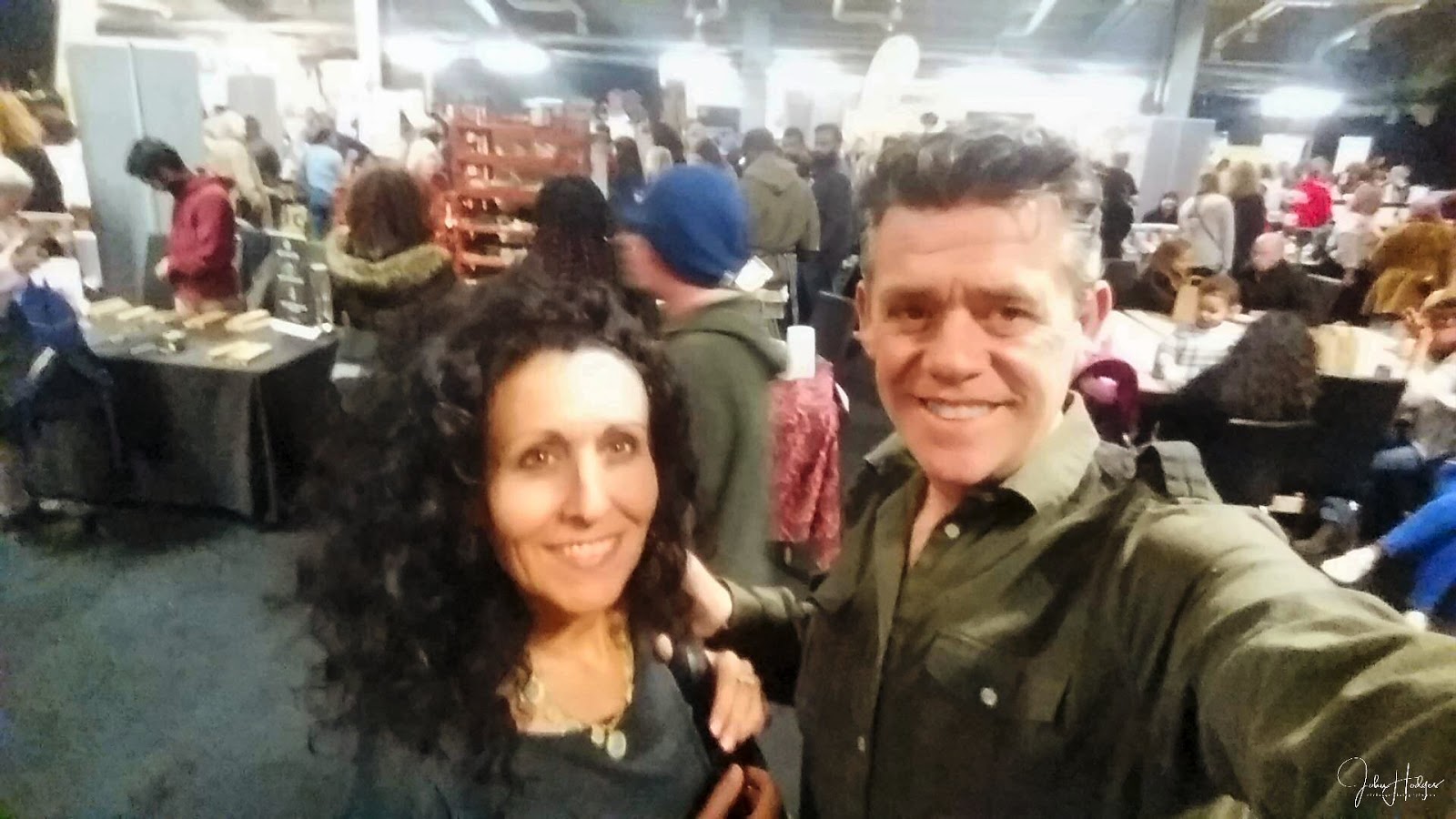
An inspirational and uplifting morning at the Birmingham Vegan Festival
A Cruelty-Free, Vegan Day Out
by Pilar Bueno
For the last 10 years or so now, both John and I have been strong advocates of Green and Healthy living and we rejoice on the realisation that we are incredibly lucky to be able to make a living sharing our lifestyle, our passion and respect for nature, gaining knowledge and experience as we continue to evolve and learn to live more ethically and sustainably.
I will not lie to you that at times it gets tiresome to be looked at as a freak and questioned endlessly about our life choices and particularly dietary intake.
‘Yes, I do get enough protein (plant protein that is, that I get from the “source” which incidentally is more bioavailable than animal protein)’…,
‘No, I am not malnourished’ (and my latest blood tests results can vouch for that)….,
‘No, I don’t just eat lettuce’ (as a matter of fact, I probably get more variety and nutritionally rich foods in a day than most people would have in a whole month!).
‘Yes, I do get enough protein (plant protein that is, that I get from the “source” which incidentally is more bioavailable than animal protein)’…,
‘No, I am not malnourished’ (and my latest blood tests results can vouch for that)….,
‘No, I don’t just eat lettuce’ (as a matter of fact, I probably get more variety and nutritionally rich foods in a day than most people would have in a whole month!).
Our visit to the Vegan Festival at the Edgbaston Cricket Grounds in Birmingham on Saturday 14th April was just what the doctor ordered. An event that filled us with positivity and inspiration, seeing all wide selection of delicious foods, creative crafts made out of recycled or otherwise waste materials and such enthusiasm and passion for a Cruelty-Free Life. Inspirational talks and lots of information was at hand, in order to allow us to make informed choices about improving our health, becoming aware and preventing animal cruelty and protecting our environment for us and future generations.
You’d be forgiven for thinking that the place for full of “lentil-munching hippies”, “feeble looking sandal-wearing weirdos dressed in hemp” shouting for animal rights. Gone are the days of these stereotypes, instead we were delighted to be amongst healthy looking people, engaged, informed and interested in ways to enhance their consciously Healthy and Ethical life choices.
Veganism has taken social media by a storm. Veganuary inspired people to try being Vegan for the month of January (and throughout the rest of the year). It is undeniable that there is a huge shift towards plant-based diets and everything indicates that this is not just as a fad but it is here to stay.
Food Revolution shares some very interesting statistics on their website, such as the fact that in the UK, the number of Vegans has increased by 350% compared to 10 years ago. It fills me with great hope because the choices you make don’t just affect you; they have a wider effect on other people, the animals and our whole planet.
The £3 ticket event in Birmingham was all in aid of Farplace Animal Rescue, a charity based in Bishop Auckland with a mission to rescue and re-home abandoned animals and also to create environmental improvements for all the animals via education.
If you think a Vegan Festival is not your scene, think again, because this proved to be a great day out for us. You can bring all the family, they even have a children’s area so the kids can play safely while you go and sample some of the goodies on sale. What follows is just a handful of what we experienced:
Who says that if you are Vegan you are missing out? OR … you can’t indulge in delicious treats?
I thought I had died and gone to heaven! There were so many stores tempting you with delicious looking treats for those of us with a sweet tooth. Amongst them, Scrummy Crumb stood out for the large selection of cakes on display and their great smiles (I would be smiling too if I were surrounded by all those yummy vegan treats!). Based in Hull, they are a small family run business that I hope will take the Vegan world by a storm. Their delicious bakes can be ordered on Etsy which will deliver your purchase straight to your door. Anyone for cake?
I can highly recommend their chocolate brownies and Cherry Bakewell slices. I dared anyone to tell the difference between these vegan options and the “real thing” – Amazing.
Plastic Free and Zero Waste
John and I are making conscious decisions every day to reduce, reuse and recycle everything in our lives, and in the process, to avoid at all cost buying products that are made out of plastic or come packaged in plastic. An incredibly hard task because everything seems to be overly packaged in the supermarkets – my bugbear being cucumbers wrapped in those obscene clear plastic sleeves… Arghhh
I know we all try to do our best to recycle plastics at home, but as we all know, not all types of plastics are recyclable and end up in landfills in our oceans and take thousands of years to decompose, all the time leaking pollutants into the surrounding soil and water and killing the wildlife. If you saw David Attenborough’s Blue Planet II television series, you will be aware of the devastating threat that we are facing.
So don’t just recycle, try to avoid plastic in as many aspects of your life as you can. For instance, why not change your standard toothbrush for an eco-friendly one?
You might not know that your toothbrush is made from polypropylene plastic and nylon bristles (both non-renewable fossil fuel sources) and that around 50 million pounds of plastic toothbrushes end up in landfills every year in the USA alone – those are staggering numbers!
That is why we opted to buy an environmentally friendly bamboo toothbrush from Zero Waste Club.
I have been after one of these for a while but I wanted to make sure that my money went to an ethical company. I love their ethos and fully support their entrepreneurial spirit and passion to help save our planet. Their Replaceable Head Bamboo Toothbrushes are very innovative, simple yet beautifully designed and very importantly 100% Biodegradable. They are made from Sustainable Bamboo, a plant that grows super-fast in close proximity to each other (over 3 feet every day!)
The bristles are Bisphenol A (BPA) free and recyclable. I love the fact that I only have to replace the Head of the toothpaste generating, therefore, less waste (not that it will be wasted really, as it will help to “feed” my composter). They use plastic-free packaging for all their mail orders and all “unavoidable” packaging is 100% recyclable. On top of it, Zero Waste Club will plant a tree for every item you purchase!
If you want to explore more ways in which you can reduce your waste, take a look at Going Zero Waste website
Natural Beauty
I am always on the lookout for companies that provide natural, chemical and #crueltyfree cosmetics and personal hygiene products, that I can recommend in my Green Up Your Beauty Book. Today, I was in for a treat as the selection was wide, but in particular, one company stood out for me.
Siobhan is the woman behind The Artisan Soap Shack. They produce an incredible range of 100% Natural, Organic, Vegan Soaps and Organic Beard Oils, all handmade here in the UK.
Siobhan proudly tells me “We don’t Test on animals, We Test on our Friends! And I can tell that her fortunate circle of friends are more than willing to be her “guinea pigs” because the soaps are fantastic. I have tried the Oatmeal and Shea Butter soap with Frankincense and Clove Leaf. It has a beautiful subtle fragrance and leaves your skin lovely and soft.
Siobhan tells me she is currently working on a new Solid Shampoo, so watch out for the new product range coming into the market by visiting her website.
You Will Not Miss Meat
Seitan’s Grill is a travelling Vegan Burger Grill that offers very exciting meat-free fast food meals, all 100% homemade from organic produce from local suppliers, wherever possible.
We had the most amazing Pulled Jackfruit chilli with a “quick-as” chilli sauce and a delicious Seitan sandwich. Their seitan burgers are by far the best we have ever tried. We purchased some pre-packed ones to cook back at home the following day, only wishing we had bought more.
Liam and his Seitan Grill will go far. His passion and enthusiasm are contagious and a force to reckon with. Thanks for such an amazing meal – like your logo says “tasty as hell”!
And because we needed to “wash down” our meal with a cold beverage, we headed straight to the Red Moon Brewery stall for a Hand Crafted (Chemical Free) Ale. Those of you who know me well, know that I am always partial to a swift half, and here I found my new brand: “Poison’s Pleasure”.
Their brewery is based in Birmingham but the great news is that they are currently in negotiations with Amazon to delivery their handcrafted beers directly to your door.
For the creative minds and those that like to wear unusual accessories and jewellery, the Vegan Festival is a treasure cave. You will be amazed at the creativity, genius ideas presented, all made from recycled and repurposed materials. Handbags, Belts, earrings and an endless list of beautiful creations made with cork, electric wires, inner tubes and old tyres! Check out Paguro Upcycle
Conservation in Action
Last, but not least, was a group of heroes under the name of Sea Shepherd who are campaigning hard to end the appalling destruction of our ocean wildlife and habitats. As a registered marine conservation charity, they rely on volunteers and word of mouth to carry their message and help them raise funds to continue their vital work. Please visit their Facebook page, like, share or even join their group of volunteers.
Have we got your interest? If so, I hope you will be tempted to visit a Festival soon. For all enquires about future Vegan Festivals, visit their Facebook page or email them at festivals@farplace.org.uk
Regards
Pilar and John
#CrueltyFree #Vegan #PlantBased #AnimalRights #GreenUpYourLife #HealthyLiving #VeganFestivall #VeganSkincare #Reduce #Reuse #Recycle #Upcycle #repurpose #CrueltyFreeCrafts #LeapingBunny #Handmade #GreenLiving #Sustainable #EnvironmentallyFriendly #SociallyConscious #Health&Nutrition #SirtFood #ChemicalFree #NonToxic
Labels:
banana bread,
broccoli,
cruelty free,
diet,
food,
gluten free,
green living,
green-living,
healthy living,
plant based diet,
power-food,
sirtfood,
Smoothie,
sprouting,
vegan,
weightloss,
wholefoods
Tuesday, 8 November 2016
Monday, 10 October 2016
Introducing Genetically Modified Organisms GMO 2nd Edition
What does Value Free Mean?
by Mark Plummer BSc / PGCE
Science is like any other human endeavour in that it is not a static process; it is an organic and dynamic mechanism by which we make sense of the world around us. For an enquiring mind, an observation becomes hypothesis which in turn becomes a theory. The theory holds until it is replaced by another. If new observations lead to a new hypothesis, then it is entirely possible that a new theory will present itself. Every time new evidence is presented the existing theory is re-assessed and if necessary it is replaced. Within this paradigm, there are countless examples of where science can and should be framed as a value-free process, a phrase which has different meanings in different contexts. In my view, any aspect of science which has no consequences in the real world as it is today is value free. To be genuinely and totally objective the application of science and /or technology in the real world must not have any impact (good or bad) what so ever. A personal opinion or perception of that application must equally have no consequence for other people, their community or the natural world. The only way that science as a discipline can operate in this manner is if it separates itself from the world it is part of. I do not believe that an agency operates in isolation from the others. No single structure can implement a given policy or move in a given direction without it having consequence or impact on the others. Clearly, as far as GMO’s are concerned the science and the technology which applies it will always have an impact on the world around us. Hence we as human beings are going to make a value judgement on whether we agree or not. My position is obvious and another reason for this series of eBooks is to ask you to make a similar call. According to those who support the release of GMO’s into the environment, this is not the case. We are supposed to accept without question GMO’s because the science is sound (which it isn’t) and the organisms themselves are equivalent (which they are not) to those which are already here. We are supposed to ignore all other considerations. We are supposed to agree solely on the basis of results presented in a given set of primary science papers. In one sentence the community of practising scientists who support and/or develop GMO’s actually want hundreds of millions of people to drop their opposition because of the results presented in the science that they have produced. We say that perhaps you ought to stop and engage with the reasons why there is so much opposition. This engagement does not mean grinding opposition down it means actually talking to the people you are supposed to serve.
Given that achieving objectives such as improved food security, reduced pesticide use and biodiversity are supposed to benefit all living organisms on the Earth, they must be constantly evaluated. The how, why, who and where and the mechanisms by which such goals are hit must always be critically assessed. Hence by definition, the development of GMO’s cannot be framed in any way as a value-free process. Such issues connect to questions on the “ethics of science” and that means there is no right or wrong answer. It really does depend on what kind of future you want and what kind of planet you want to live on. For example, I have been opposed to GMO’s from the outset. Over the last 20-25 years, I have seen nothing to make me change my mind. I consider the current situation in the Middle East and North Africa to be a crime against humanity, for which there will be some future reckoning. I do not support nuclear power in any sense and developments such as fracking represent a complete disregard for the coming climate (at least for our species) catastrophe. Others have the opposite view on these and other systemic global problems. It is up to the reader to decide where they stand on such issues and for most there is no middle ground. For instance, you either:
• Want to live in a nuclear-free world or you don’t.
• Want and end to poverty, inequality, conflict and global war or you don’t.
• Want fracking to go ahead here in the UK (or anywhere else) or you don’t.
• Want to push for as wide and comprehensive renewable energy portfolio as we can, or you don’t.
• Want fossil fuels to remain in the ground or you don’t.
• Support the Palestinian cause or you don’t.
• Want to eat food produced by means of genetic engineering of plants and animals or you don’t.
• Think that the techniques used in the laboratory produce food which is substantially equivalent to that which already exists or you don’t.
None of these subjects are value free and your viewpoint on them indicates exactly the values you hold. Perceptions and opinions vary, but one point is 100% cast iron guaranteed, once you have embarked on any of the above examples, there is no going back. Either way, you have to stand up and be counted warts and all. There will be consequences and that means your value system will come to the forefront of your thinking. In contrast, value-free means that the debate or discussion can be settled by the evidence alone and that is it, the subject is closed. And there is no consequence, the answer just is and that is it. The supporters and drivers of GMO’s want you to believe that the science and technology falls into this category. Hopefully, the following example will demonstrate, yet again, why I (and hundreds of millions like me) do not believe this to be the case.
Consider the hypothesis that the Tyrannosaurus Rex (T-rex) was not the majestic predator we like to think it was. Within the field of palaeontology there are those who assert based on evidence that the animal was a predator. Conversely there are those who impart that the picture is not so clear. This second school of thought suggests with equally robust science that T-rex was in fact a scavenger, living off carrion where ever it could find it. The question for us today is to ask “does it really matter?” Well, it does in the sense that we can use palaeontology to help us construct an ever more detailed picture of the prehistoric world. The more blanks we can fill in the more detailed picture we have of evolution and the processes which drive it. On the other hand does it really matter to you, me or anyone else outside of the disciplines of Earth science and palaeontology, whether T-rex was scavenger or not? Will the outcome of this debate influence any of the decisions you make during your lifetime? It might, but probably not. Did you even know that T-rex debate was even happening? You may have done, but the chances are you didn’t. Overall, the question appears to be settled, T-rex it appears on the balance of probabilities and continued good solid and objective science, was a predator, so what of it? Will the answer help you pay the mortgage? No of course not. The answer will satisfy our thirst for knowledge and need to construct a picture of the past and rightly so, but that’s it. In other words, the scavenger or predator discussion for T-rex is a value-free scientific debate. Does the scientific evidence either way make any difference to us, the biosphere today or the future direction of evolution? The answer is of course a succinct no. I mean to say do you really care whether T-rex was a predator or not? Without belittling the science in any way shape or form, I don’t. Even the chief protagonist for the scavenger theory is reported to have said words to the effect of “look I don’t care either way, let’s just do the science and find out”. Bang on and no argument with that.
In terms of the potential future impact on what remains of the biosphere the presence (or not) of GMO’s are absolutely pivotal. I would love to live in a world where just a fraction of the obscene amounts of money and expertise tied up in crop and animal genetic engineering was diverted to worthwhile endeavours such as palaeontology or genuine solutions to climate change. Indeed, I would love to see the huge subsidies and massive bank balances enjoyed by big agriculture and the GM component of the biotechnology industry immediately diverted to organic and permaculture systems. And I would love to see it on a global scale. I would like to see a full global moratorium on every aspect of plant and /or animal genetic engineering. I would love to see the whole enterprise properly regulated and thoroughly investigated. Where appropriate I would love to see criminal charges brought against the agencies and individuals who support it and have brought us to the current position. The supporters of GMO’s have not (in my experience) even acknowledged this point of view as legitimate. In many ways they do not even know it even exists, of such realities are schisms made. In contrast, my value system says the above opinions represent part of the framework to achieving a genuinely sustainable future for ourselves and all the life on planet Earth. Sadly, for myself and millions more who have serious questions on the GMO issue, such a shift is not going to happen anytime soon and it will only happen if we demand it, campaign for it and make it happen.
Without a doubt on GMO’s and agriculture, on climate change and biogeochemical cycles, on biodiversity, on conflict and nuclear issues the proverbial clock is ticking. These are the biggest issues that I believe need to be resolved if we and the biosphere which supports us are to survive. On the current trajectory something is going to give and as our current global situation stands it is going to put what we have seen so far into the shade. From an evolutionary perspective the picture is absolutely terrifying. We all live in a world which is already in a catastrophic and disgraceful situation and I would argue heading toward a 6th mass extinction. Well since the Cambrian explosion at any rate. A pivotal event known as the Permian mass extinction occurred in the prehistoric past. Approximately 250 million years ago on a Tuesday at 10.00am an inter-related series of processes was set in motion by the geology of Planet Earth. About 100,000 years later the collective of processes had fully run their course. By which time anything up to 90% of all life on Earth had been eradicated. In everyday language is referred to by several phrases including “the great dying” or “the day the Earth nearly died” and words such as “wipe-out”. An alternative supposition is that the Permian event was caused by a meteor impact, but the evidence for this has always been lacking. Having said the reader can guess which body of research the fossil fuel and nuclear industries have funded in recent decades. Once again it is demonstrated that science is not a value-free process.
I believe with good reason and with an increasing sense of fear (if not unbridled terror) that we are heading Permian levels of environmental collapse. Unless “things” change or are compelled to, I believe that it will happen one way or the other in a timescale that is measured in decades. Some say that the process is already occurring. Given the current rate of species extinction and environmental destruction, it is difficult to argue against such a proposition. The prospect of artificial genetic engineering leading to the release of human-made novel organisms into the natural world absolutely fits into this paradigm. And it’s not pretty. Take a second and think about it. The world is unstable and becoming more so, the spoilt children who run things seem to be in a more manic mood than has hitherto passed. If you are a rational human being this is undeniable and as we all know instability breeds uncertainty. Given our current disgraceful and avoidable situation are we really to stand by and allow the release of a whole plethora of GMO’s (plant and animal) into a biosphere that is already in a critically endangered state? If you believe science to be value free then the answer is yes. If you do not believe science to be value free the answer is no. Once again there is no middle ground. I reiterate (again) that we have no idea of the long-term consequences of such releases; we truly are firing in the dark. The supporters of GMO’s are firing pellets of novel DNA into the fabric of evolution and they seriously expect us to believe that there will be no consequence. More bizarrely some have even suggested that if there are consequences our ingenuity will overcome them. I say it isn’t worth the risk especially when there are alternatives. I say that anyone who believes there will be no consequence needs psychiatric help and certainly should not be making decisions concerning GMO’s on our behalf.
By the time you read this we may well be in a world where Donald Trump is the president of the most powerful country in the world. The tragedy is that Hilary Clinton isn’t really much better, but she is not Donald Trump. Sadly, in terms of outlook and foreign policy there really isn’t much difference between the two contenders. In the name of humanity, a Donald Trump presidency cannot be allowed, but it could well happen. We also live in a world which looks set to leave the Holocene epoch behind and enter a completely new time frame called the Anthropocene. In either case all bets, statutes and mechanisms by which our affairs are organised are off and I do mean all bets. The prospect of living in a world with a Trump presidency, in the Anthropocene, where absolutely nothing is done about the above mentioned issues (and others) and we have unfettered GMO’s as the norm scares this writer to the core of his being. At the end of the day it is very simple, do you want that kind of future or not? As I make crystal clear here and in the second edition of the “Introducing GMO’s book” there is no middle ground, so what do you want? What we have and likely much worse, or do you believe as I do that “another world is possible”?
References
4: http://isj.org.uk/marxism-and-the-anthropocene/
![]() |
Release Date 2nd Edition October 10th 2016
Subscribe to:
Posts (Atom)